A Case Study in the Hidden Complexities of Vintage Timepiece Preservation
How Ted Sees a Ticking Watch
When Ted Tongson first encounters a vintage Swiss watch that “runs,” he doesn’t smile—he squints. What most collectors interpret as a promising tick, Ted hears as a warning. He doesn’t wind it further, doesn’t test its timekeeping. He sets it down like a forensic examiner and says quietly, “It’s moving—but we don’t know what it’s doing to itself.”
For Ted, function is not the priority, but evidence is. Every watch that crosses his bench at US Watch Masters begins with silence: the case unopened, the movement untouched. He listens first, not to the reassuring tick that seduces buyers, but to the subtle irregularities that reveal internal distress. He examines its amplitude with practiced eyes. He checks the crown’s tension, feeling for the telltale resistance that speaks of crystallized lubricants within.
Only then does he open it—not to admire the ticking, but to interrogate the surfaces that make it tick. Are the oils crystallized into amber-colored resin? Are there microscopic abrasion tracks scoring the jewel bearings? Has the mainspring torqued beyond its safe operational arc, stressed by decades of compromised lubrication? These questions matter infinitely more than whether the hands complete their circuit around the dial.
To Ted, motion without maintenance is a mask—an elaborate deception that conceals mechanical destruction in progress. The watch may tick today, but each oscillation on degraded lubricants removes microscopic particles of hardened steel from pivot points, each gear rotation grinds away teeth designed to last centuries, and each mainspring cycle stresses components already weakened by decades of chemical assault.
The restoration begins when the watch is fully disassembled, cleaned, and examined part by part under magnification—not with hope but with proof. Not with assumptions about function but with evidence of what that function costs the mechanism beneath.
This methodical skepticism puts Ted at odds with a vintage watch market that celebrates what he sees as dangerous: the seductive promise of the “running” watch.
The Dangerous Allure of the “Running” Watch
Hundreds of vintage pocket watches appear on auction sites on any given day with the same seductive promise: “Runs and keeps time.” The photographs show hands sweeping around pristine dials, second hands marking a steady rhythm, and sellers confidently declaring functionality. To the uninitiated collector, these timepieces represent ready-to-wear pieces of horological history at attractive prices.
They represent something else entirely: mechanical time bombs.
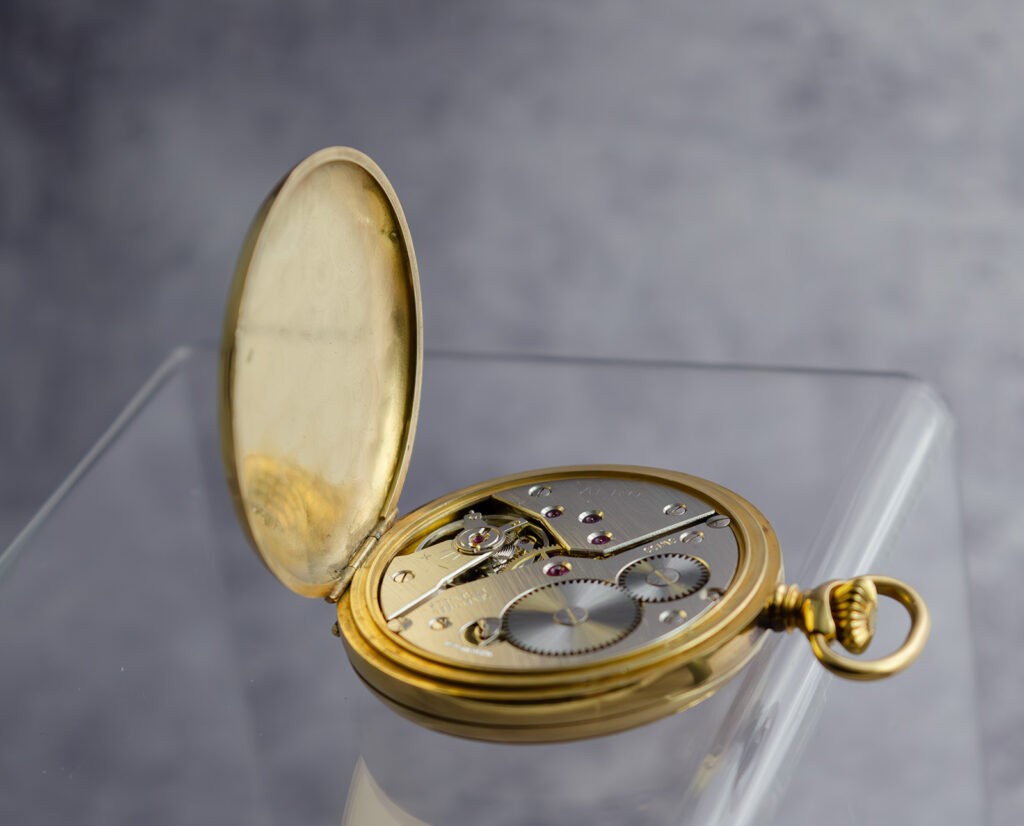
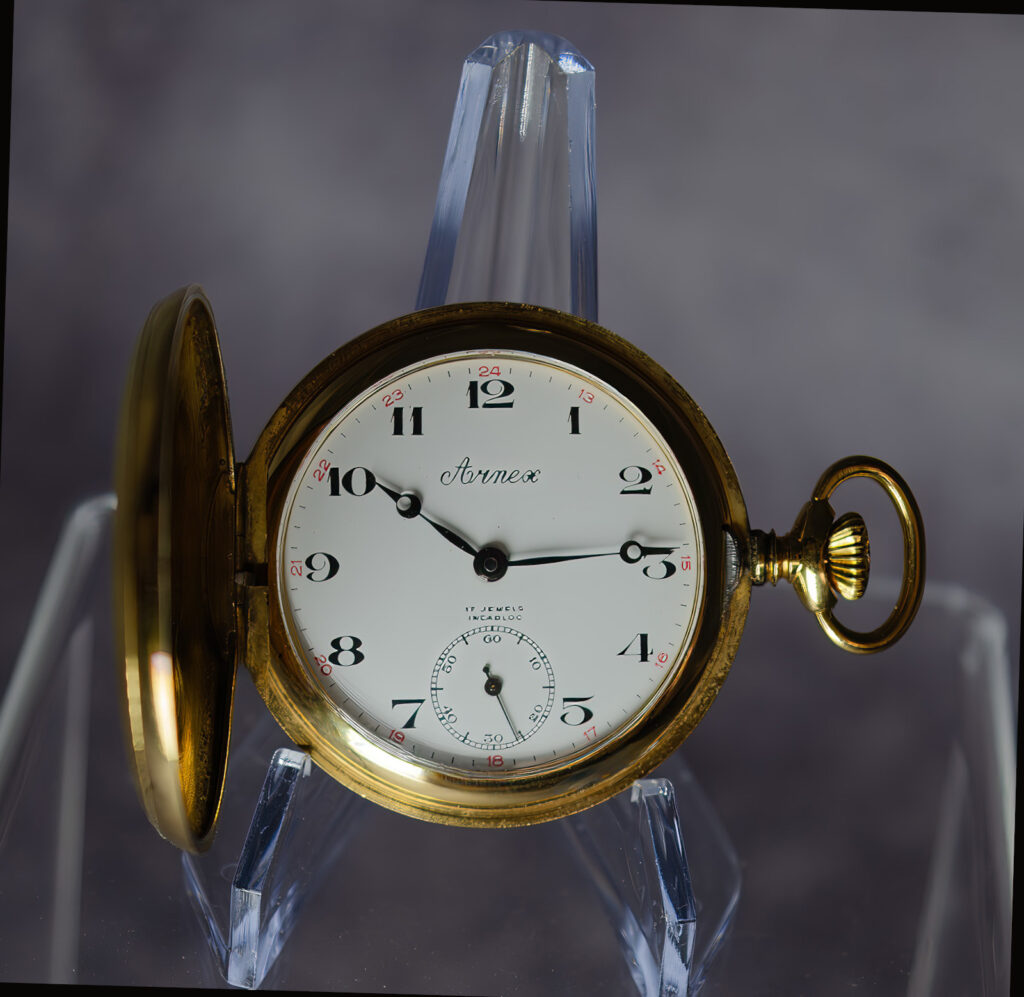
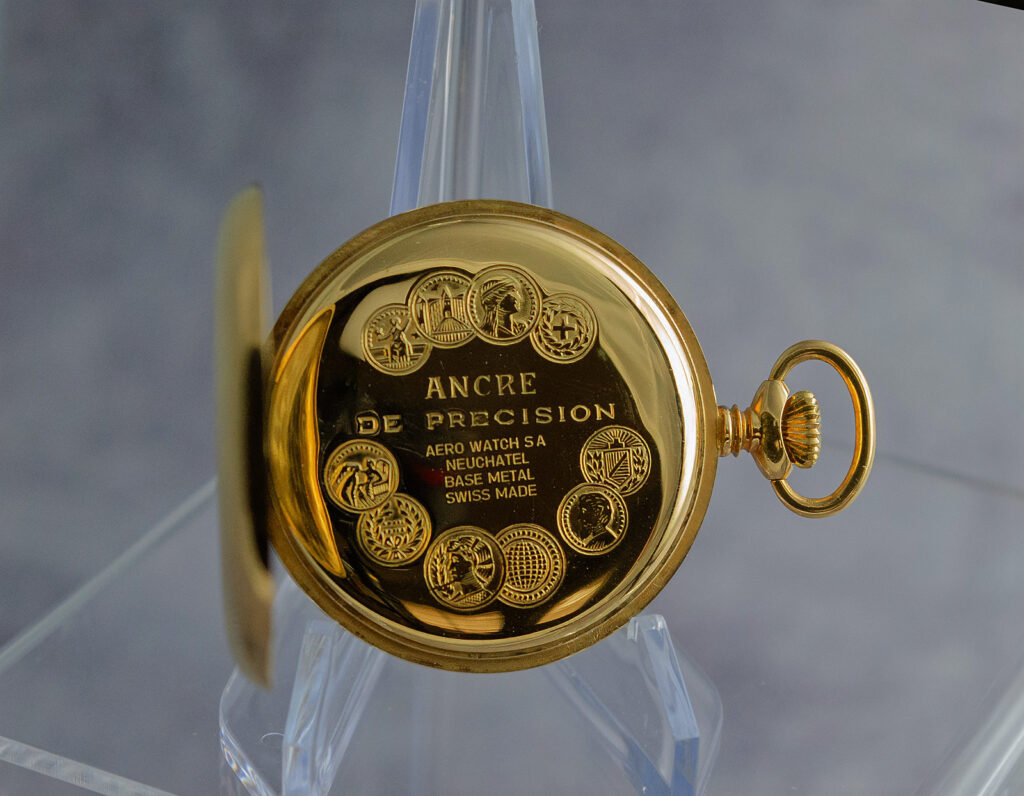
Consider this 1950s Arnex 14k gold pocket watch, currently listed as “running and keeping time.” The seller’s description emphasizes its operational status, clean appearance, and reasonable asking price. For most buyers, this represents exactly what they’re seeking: a functional vintage timepiece that doesn’t require immediate investment in restoration.
This watch—and thousands like it—embodies one of the most persistent and costly misconceptions in vintage horology: that movement equals proper function.
The Tribology of Self-Destruction
Inside that “running” Arnex, a complex drama of mechanical degradation unfolds with every tick. The movement, likely unserviced for decades, operates on lubricants that have long since transformed from protective barriers into abrasive compounds. What watchmakers call “unctuous lubrication”—the specialized molecular bonding that allows lubricants to function under the high-pressure, low-speed conditions within a watch movement—has failed.
Modern synthetic lubricants like Moebius 9010 are designed to maintain their protective properties for 5-8 years under optimal conditions. Beyond that timeframe, oxidation and molecular breakdown create lubricants that accelerate rather than prevent wear. The irony is devastating: the oils meant to preserve the movement become agents of destruction.
When aged lubricants thicken into glue-like substances, they create what tribologists recognize as catastrophic lubrication failure. Pivot points designed to operate with coefficients of friction measured in thousandths suddenly experience metal-on-metal contact. Jewel bearings, those synthetic corundum marvels engineered for frictionless rotation, become repositories for crystallized oils that function like grinding compound.
The Arnex continues to tick because mechanical watches are remarkably resilient. The basic physics of escapement and balance wheel can function even under severely compromised conditions. But each oscillation now removes microscopic particles of hardened steel from pivot points, each gear rotation grinds away teeth, and each mainspring rotation stresses components already weakened by decades of chemical assault.
The Economics of Deferred Maintenance
The vintage watch market’s pricing structure actively encourages this mechanical destruction. “Running” watches command premiums that can exceed restoration costs, creating perverse incentives where immediate functionality is rewarded over long-term preservation. The Arnex’s current asking price reflects this market distortion—buyers pay extra for the privilege of owning a timepiece that’s actively destroying itself.
Recent market analysis shows vintage watches from the 1950s-1960s appreciating steadily, having already absorbed their depreciation curves. Unlike modern timepieces that typically lose value for 10-20 years, vintage pieces like the Arnex represent “clear winners in terms of investment and sustainability.” However, this appreciation potential evaporates rapidly when compromised movements require extensive reconstruction rather than preventive maintenance.
Professional restoration, while requiring upfront investment typically ranging from $400-800 for a complete service, represents superior economic logic when amortized over a timepiece’s extended functional life. The alternative—continued operation on failed lubricants—virtually guarantees eventual repairs costing significantly more than preventive restoration, often involving component replacement that could have been avoided entirely.
The Restoration Imperative: Science Over Sentiment
Proper restoration transcends the simple cleaning and oiling of most commercial watch repairs. It requires complete disassembly, multi-stage cleaning using specialized horological degreasers, ultrasonic treatment, and component-by-component examination under magnification. Each piece must be evaluated for wear patterns that indicate the progression of tribological failure.
The lubrication process alone involves multiple specialized oils applied in precisely measured quantities. Light oils like Moebius 9010 serve high-speed, low-pressure contact points in the gear train. Heavy oils and greases like Moebius HP 1300 handle higher-pressure applications in barrel arbors and wheel shoulders. Specialized treatments like Fixodrop 8941 prevent oil migration, ensuring lubricants remain precisely where needed for optimal function.
This systematic approach differs fundamentally from the surface interventions that allow watches to “run.” Professional restoration addresses the root causes of mechanical degradation rather than merely managing its symptoms. The result is not just renewed function but extended operational life measured in decades rather than months.
The Authentication of Expertise
Perhaps the most telling indicator of restoration quality lies in the warranty offered by the service provider. The vintage watch market typically operates without guarantees—sellers acknowledge implicitly that their “running” timepieces carry uncertain futures. When restoration workshops offer multi-year warranties on their work, they make contractual commitments possible only through confidence in their technical competence and procedural thoroughness.
At US Watch Masters, every restored timepiece carries a two-year parts and labor warranty that most vintage sellers wouldn’t dare offer. This guarantee reflects more than marketing confidence; it represents the mathematical probability that properly executed restoration will provide reliable service. When lubricants are correctly specified and applied, when component tolerances are verified and documented, and when reassembly follows original manufacturing protocols, the restored movement’s behavior becomes predictable within known parameters.
This predictability extends beyond mere function to precision timekeeping. Properly restored movements undergo regulation involving beat error measurement, amplitude adjustment, and multi-position testing. The goal is not simply motion but accuracy within chronometer specifications—performance that often exceeds the watch’s original factory standards due to advances in lubricant technology and adjustment techniques.
The Cultural Dimension: Preserving Mechanical Memory
The choice between purchasing a “running” watch and commissioning proper restoration carries implications beyond individual ownership. Each mechanical timepiece represents what horologists call “mechanical memory”—the accumulated knowledge, techniques, and cultural values embedded in its construction. When these timepieces operate on compromised lubrication, they degrade mechanically and culturally.
Traditional restoration serves as cultural preservation, maintaining physical artifacts and the knowledge systems required to understand and service them. Master restorers function as custodians of techniques that span centuries, preserving skills that risk disappearing as digital timekeeping dominates contemporary horology. This cultural dimension transforms restoration from mere repair into heritage preservation.
Manufacturers like Vacheron Constantin explicitly acknowledge this responsibility, committing to “perpetuate the beat of a movement sometimes centuries old” through restoration programs that utilize traditional tools alongside modern techniques. This continuity ensures that the artistry and precision of historical watchmaking endure, transmitted through generations of craftsmen who understand that preservation requires more than sentiment—it demands technical mastery.
The Sustainable Alternative
The vintage watch market’s emphasis on immediate functionality reflects broader cultural patterns prioritizing convenience over longevity. The “running” watch represents the horological equivalent of planned obsolescence—acceptable short-term performance that virtually guarantees eventual failure. This approach contradicts the fundamental design philosophy of mechanical timepieces engineered for indefinite operation through periodic maintenance.
Proper restoration aligns with the original design intent while supporting sustainable consumption patterns. Unlike mass-produced consumer electronics designed for replacement cycles, mechanical watches can theoretically operate indefinitely when properly maintained. This longevity makes restoration an act of sustainable consumption that contradicts disposable culture while supporting traditional craftsmanship.
The environmental implications extend beyond individual timepieces to the preservation of manufacturing knowledge. Traditional watchmaking techniques, developed over centuries of refinement, represent irreplaceable cultural resources. When vintage timepieces receive proper restoration, they support the economic viability of master craftsmen whose skills might otherwise disappear.
Case Study: The Arnex Transformation
Returning to our example, Arnex pocket watch, professional restoration would begin with complete documentation of its current condition, including photographic records and measurement data. Disassembly would reveal the extent of lubricant degradation, component wear, and information guiding restoration strategy and component replacement decisions.
The movement would undergo multi-stage cleaning using specialized degreasers and ultrasonic equipment, removing decades of contaminated oils and accumulated debris. Each component would receive individual examination under magnification, with wear patterns documented and compared against acceptable tolerances. Worn components would be replaced with period-appropriate parts or carefully manufactured reproductions.
Reassembly would follow original factory specifications, with fresh lubricants applied according to contemporary best practices. The completed movement would undergo extended testing under various positions and conditions, verifying accuracy and reliability. The final result would be a timepiece that functions and performs to original specifications while carrying warranty protection unavailable in the vintage market.
The transformation extends beyond mechanical performance to long-term value preservation. A restored Arnex with documented service history and original components maintains appreciation potential that compromised movements cannot match. The restoration investment becomes part of the timepiece’s provenance, evidence of proper stewardship that enhances rather than diminishes collectibility.
The Choice: Motion or Mastery
The vintage watch market offers collectors a fundamental choice between immediate gratification and lasting value. “Running” watches provide instant satisfaction at the cost of mechanical integrity and long-term appreciation. Professional restoration requires patience and investment but delivers authentic function, warranty protection, and heritage preservation.
This choice reflects broader questions about our relationship with craftsmanship and cultural preservation. Do we value the appearance of function over its reality? Are we willing to support the traditional skills that make mechanical timekeeping possible? Will we accept responsibility for preserving artifacts that embody centuries of human ingenuity?
The answers manifest in our decisions about individual timepieces. When we choose restoration over convenience, we support mechanical preservation and cultural continuity. When we demand warranties and documentation, we encourage professional standards that benefit the collecting community. When prioritizing long-term value over short-term savings, we make economic decisions that align with sustainable consumption principles.
Conclusion: The True Measure of Time
A watch that ticks may seem to function, but function requires more than motion. It demands precision, reliability, and confidence from proper maintenance. The difference between a “running” watch and a restored timepiece is between survival, flourishing, mechanical existence, and horological excellence.
The vintage market will continue to offer seductive “running” watches at appealing prices. Collectors who understand the hidden costs of deferred maintenance will recognize these offerings for what they truly represent: mechanical time bombs disguised as bargains. Those who value authentic function over its appearance will choose the more difficult but ultimately more rewarding path of professional restoration.
In an age of disposable technology and planned obsolescence, the mechanical watch is a testament to different values: repairability, longevity, and respect for traditional craftsmanship. The choice to restore rather than merely purchase reflects a commitment to these endangered principles and an investment in their continuation.
The watch on your wrist may tick today, but will it tell time tomorrow? The answer depends not on hope but on the hands that service it—and the standards you demand from those who claim the title of master.
View this fully restored Arnex 14G pocket watch on our official eBay listing.