Posted on

The Arnex 6431: A Forgotten Workhorse of Swiss Pocket Watch History

Introduction

In the pantheon of Swiss horology, the Arnex 6431 rarely earns top billing. Yet for collectors and historians alike, this modest pocket watch offers a compelling glimpse into the transitional era of 1970s watchmaking—when affordability, mechanical reliability, and American demand converged to create something unexpectedly enduring.

Origins of Arnex: Setting the Record Straight

Founded in 1971 by Arnold Fuchs (not Claude Wollman, as some sources mistakenly claim), Arnex SA emerged as a Swiss Joint Stock Company with a clear mission: to produce accessible mechanical pocket watches for the American market. With Arnold and his wife Isabel at the helm, the company began in a modest Manhattan office at 707 West 48th Street, gradually expanding as demand grew.

The company’s name is derived from its founder, “Arnex,” coming directly from Arnold’s first name. Claude Wollman, often incorrectly cited as the founder, was Arnex’s Swiss agent based in Bienne, coordinating production with Swiss suppliers.

With initial capital focused on cost-effective materials—acrylic crystals, base metal cases, and printed dials—Arnex carved out its niche by pairing affordable construction with reliable Swiss movements. The strategy worked: by the mid-1970s, Arnex watches were flooding American department stores and gift catalogs.

The 6431 Model: More Than Meets the Eye
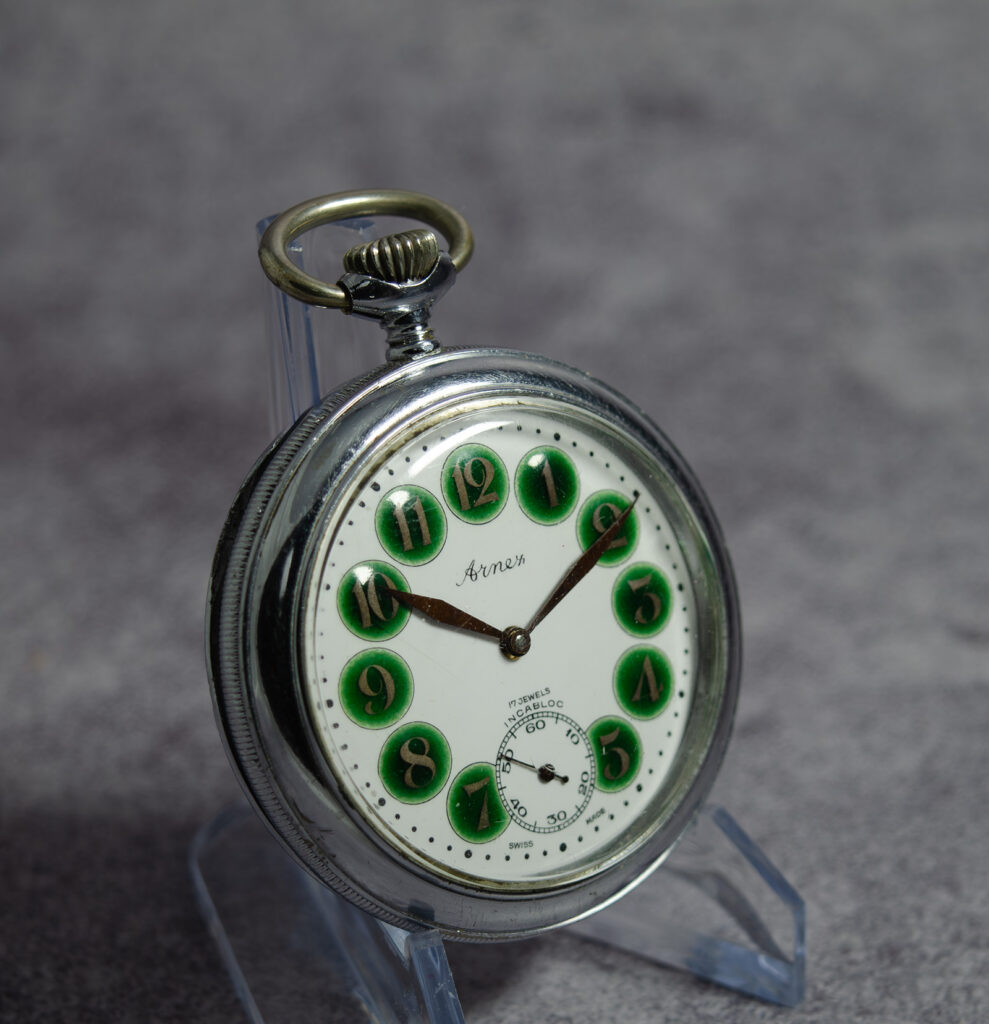
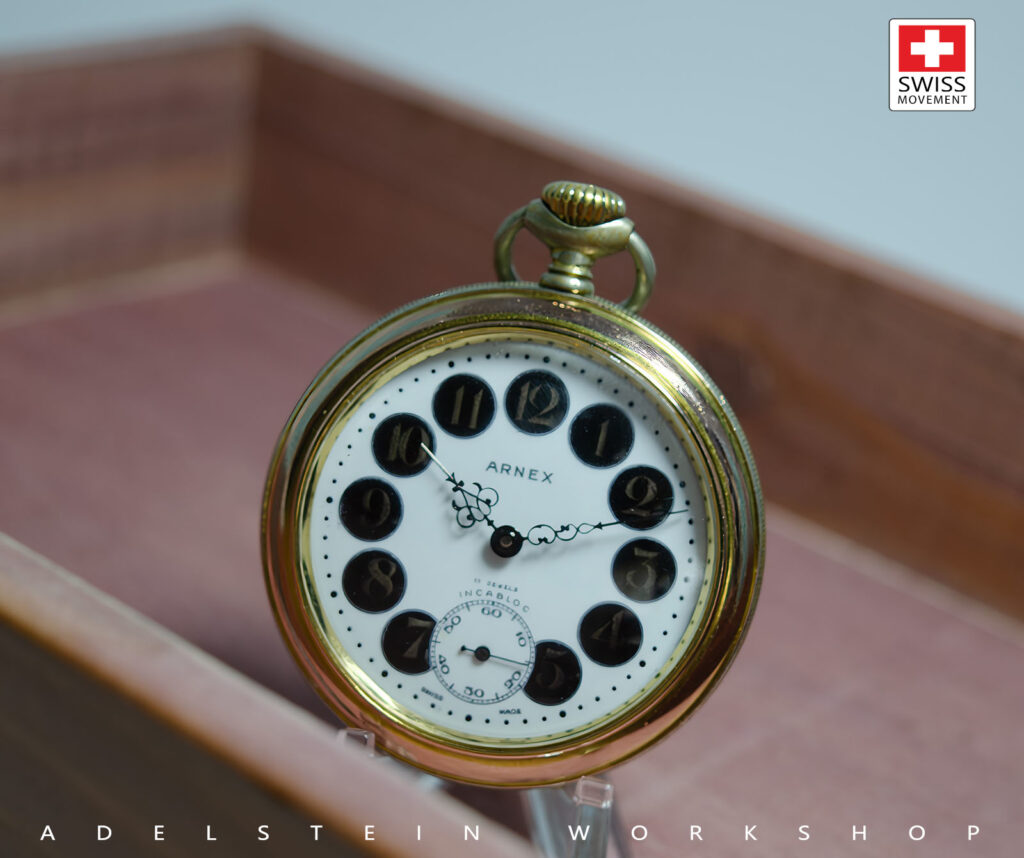
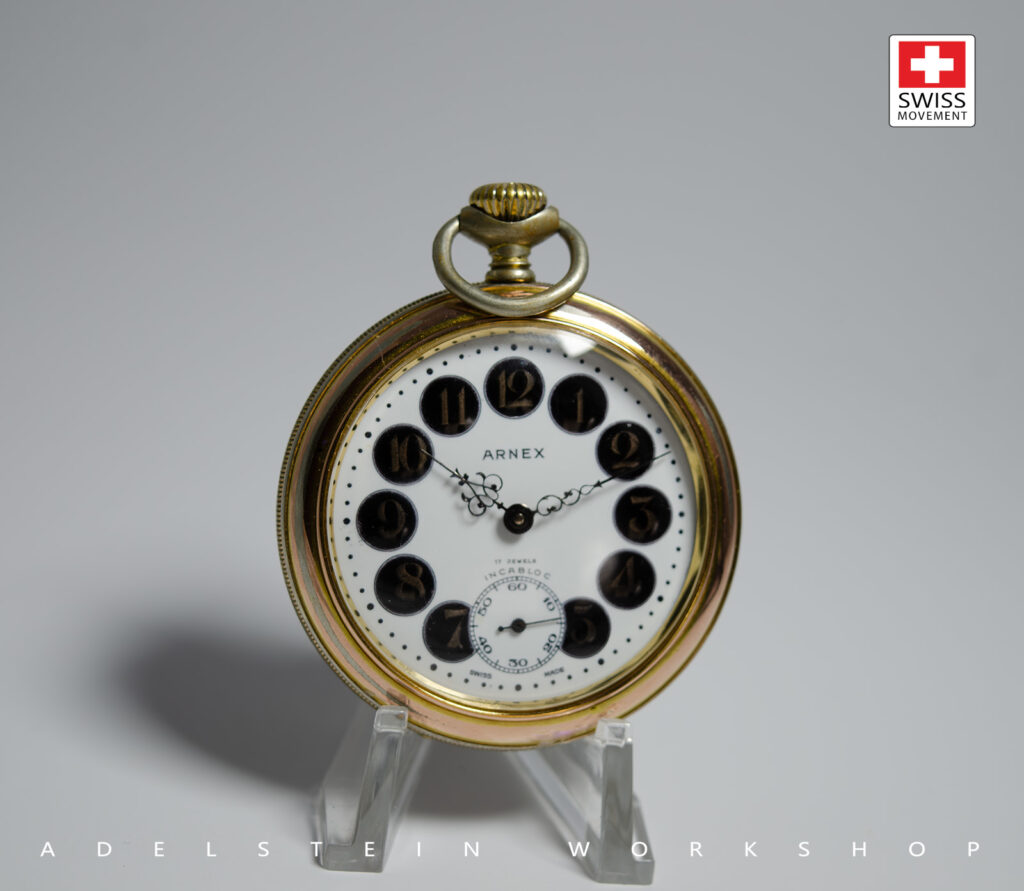
The Arnex 6431 exemplifies the brand’s ethos while hiding a mechanical secret. Typically housed in chrome-plated or gold-tone cases with fired enamel or printed metal dials, these watches featured the characteristic styling of mid-century pocket watches: Roman numerals, cathedral hands, and a sub-seconds register at 6 o’clock.

But beneath the accessible exterior lay something special—the Unitas 6431/6445 movement, a caliber that preceded the more famous 6497 and represented a higher grade of Swiss mechanical engineering.

Technical Specifications

The Unitas 6431/6445 movement featured:
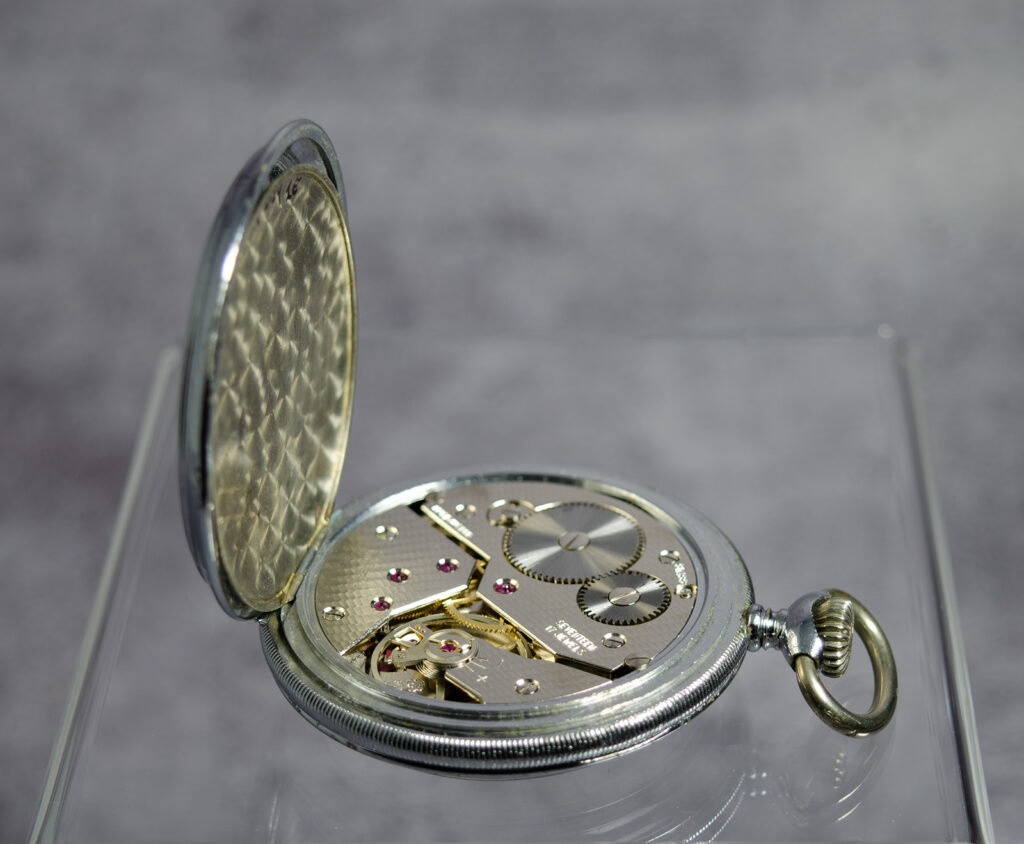
  • Size: 18.5”’ ligne (41-41.70mm diameter, 4.70mm height)
  • Jewels: 17 jewels with Incabloc shock protection
  • Power Reserve: 41 hours
  • Beat Rate: 18,000 vibrations per hour
  • Features: Manual winding, sub-seconds at 6 o’clock, adjustable stud holder, conventional regulator

What made this movement special was its superior construction compared to typical budget watch calibers. Unlike many American pocket watches of the era, the 6431/6445 included shock protection, a moveable stud holder for fine regulation, and a flat hairspring—features that made it both more reliable and easier to service.

Market Position and the Private Label Revolution
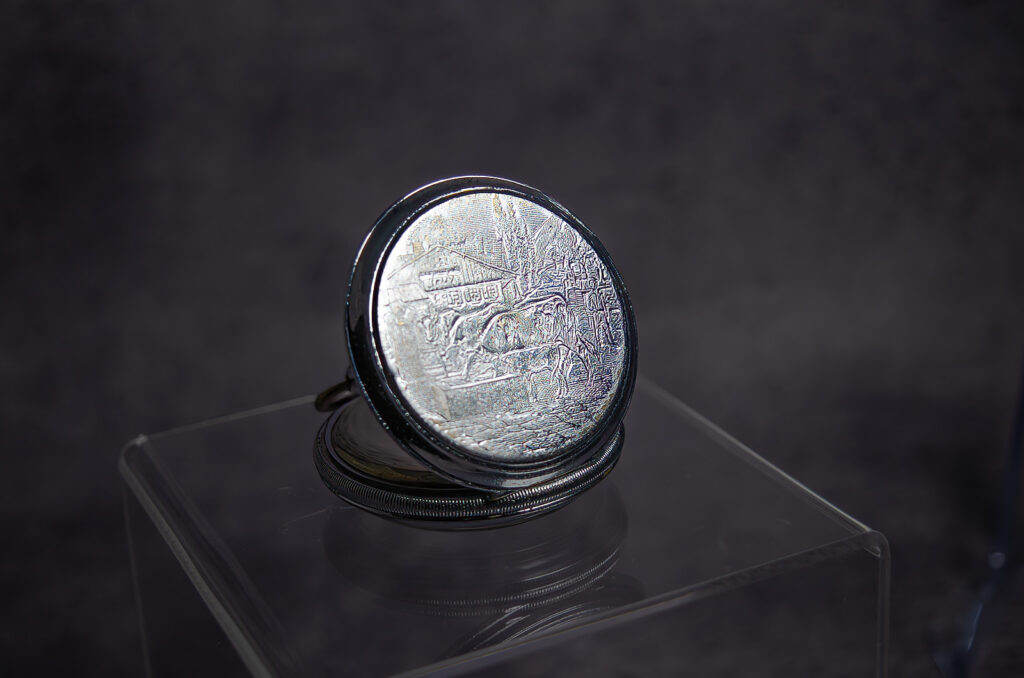
Though not considered high-end, the Arnex 6431 occupied a unique position during the quartz revolution of the 1970s. While electronic timekeeping was rapidly gaining market share, Arnex remained committed to mechanical movements, offering American consumers an affordable entry point into Swiss watchmaking.

The company’s genius lay in its private-label strategy. Arnex watches were extensively rebranded under prestigious names including Lucien Piccard, Hallmark, Neiman Marcus, Le Jour, and Lorenz. This ubiquity, while diluting brand prestige, helped cement the 6431’s place in American horological memory and made Swiss mechanical timekeeping accessible to a broader audience.

By 1977, Walter Kidde & Company acquired Arnex and merged it with Lucien Piccard, further expanding the private-label business. The original company effectively ended by 1979-1981 when Kidde sold off the operation, but thousands of these watches had already entered the American market.

The Movement That Time Forgot

The Unitas 6431/6445 represents a fascinating chapter in Swiss movement production. Produced during the 1960s and early 1970s, these calibers were considered premier movements in their class, more sophisticated than the following budget movements.
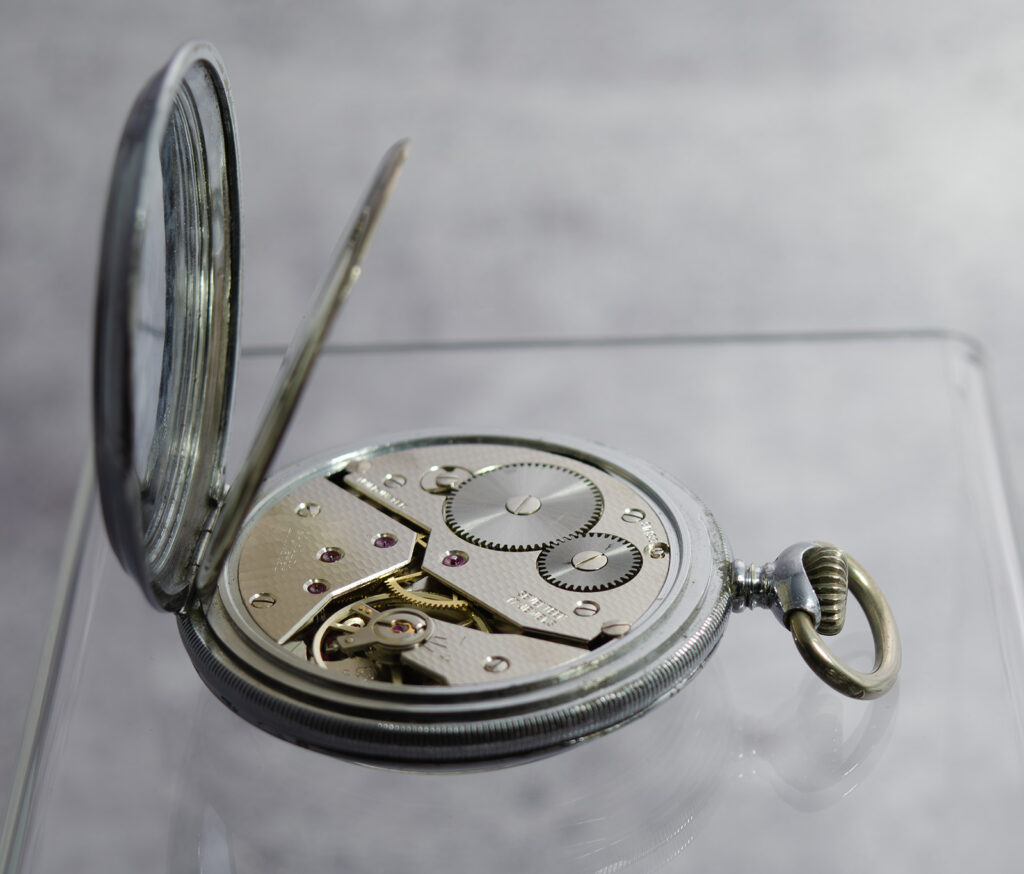
Watch repair professionals and collectors have noted several advantages of the 6431/6445:

  • Superior regulation: The moveable stud holder allowed for precise beat adjustment without the complications of later Etachron systems
  • Robust construction: 10% larger than the later 6497 movements, providing better stability and easier handling
  • Educational value: Watchmaking schools often prefer these movements for teaching due to their clear, traditional construction
  • Serviceability: Conventional regulator design and accessible components make maintenance straightforward

The irony is that these “budget” movements were actually quite sophisticated. It would take decades for the watch industry to recognize the quality of these Swiss calibers, with the related 6497 eventually finding its way into modern luxury timepieces.

Collector Appeal and Modern Recognition

Today, the Arnex 6431 occupies a curious niche in the collector market. Its affordability and mechanical pedigree make it an ideal gateway piece for new collectors, while its historical context appeals to seasoned enthusiasts interested in transitional periods of watchmaking.

Current market values reflect this growing appreciation:

  • Basic models: $25-75, depending on condition and movement type
  • Unitas 6431/6445 examples: $100-150 for complete, working pieces
  • Special editions or private labels: $75-200 for unique dial configurations or branded versions

The real value lies not in precious metals or complications, but in the mechanical story these watches tell. They represent a moment when Swiss manufacturers successfully exported affordable quality to American consumers, bridging traditional European watchmaking and modern mass production.

Restoration and Care

For collectors fortunate enough to acquire an Arnex 6431, proper care ensures decades of reliable operation:

Daily Use: Wind gently each morning until resistance increases—the 41-hour power reserve provides comfortable daily wear capability.

Storage: To protect the crystal and case finish, keep dial-up away from magnetic fields and in a soft environment.

Servicing: Professional service every 3-5 years maintains optimal performance. The movement’s conventional design makes it serviceable by most qualified watchmakers familiar with vintage Swiss calibers.

Preservation: Original dials and hands should be maintained whenever possible, as replacements can significantly impact historical authenticity.

Why This Watch Matters

The Arnex 6431 may never rival the prestige of a Patek Philippe or the collecting fervor surrounding American railroad watches, but it tells a story worth preserving. It represents Swiss ingenuity adapted for American consumers, mechanical reliability in an increasingly electronic world, and the democratization of quality timekeeping.

In an era when Swiss watches were often seen as either luxury items or cheap alternatives, Arnex found a middle path—offering genuine Swiss mechanical movements in accessible packages. The 6431 model, with its superior Unitas movement, represents the best of this philosophy.

For modern collectors, these watches offer something increasingly rare: the opportunity to own and wear a piece of horological history without the premium associated with recognized luxury brands. They’re mechanical artifacts that tick with the same rhythm they maintained half a century ago, serving as tangible connections to an era when Swiss watchmaking was adapting to a changing world.

Conclusion

The Arnex 6431 is a testament to the enduring appeal of mechanical timekeeping and the ingenuity of Swiss movement manufacturers. While it may have been positioned as an affordable alternative in its day, the quality of its Unitas 6431/6445 movement and its role in bringing Swiss watchmaking to American consumers give it lasting significance.

For collectors and enthusiasts, the 6431 offers an authentic piece of 1970s horological history. This watch delivered on its promise of reliable, attractive timekeeping while preserving the traditional craft of mechanical watchmaking during an era of rapid technological change.

In the end, the Arnex 6431 proves that significance in horology isn’t always about prestige or price—sometimes it’s about the quiet dignity of a well-made movement doing precisely what it was designed to do, day after day, decade after decade.

Available Now on eBay. This fully restored Arnex 6431 pocket watch is now available for purchase. It’s been professionally serviced and is ready for collectors. 👉 View Listing on eBay
Posted on

The Arnex 431: A Rare Swiss Pocket Watch with a Movement That Time Forgot

Introduction: A Watch That Defies Expectations

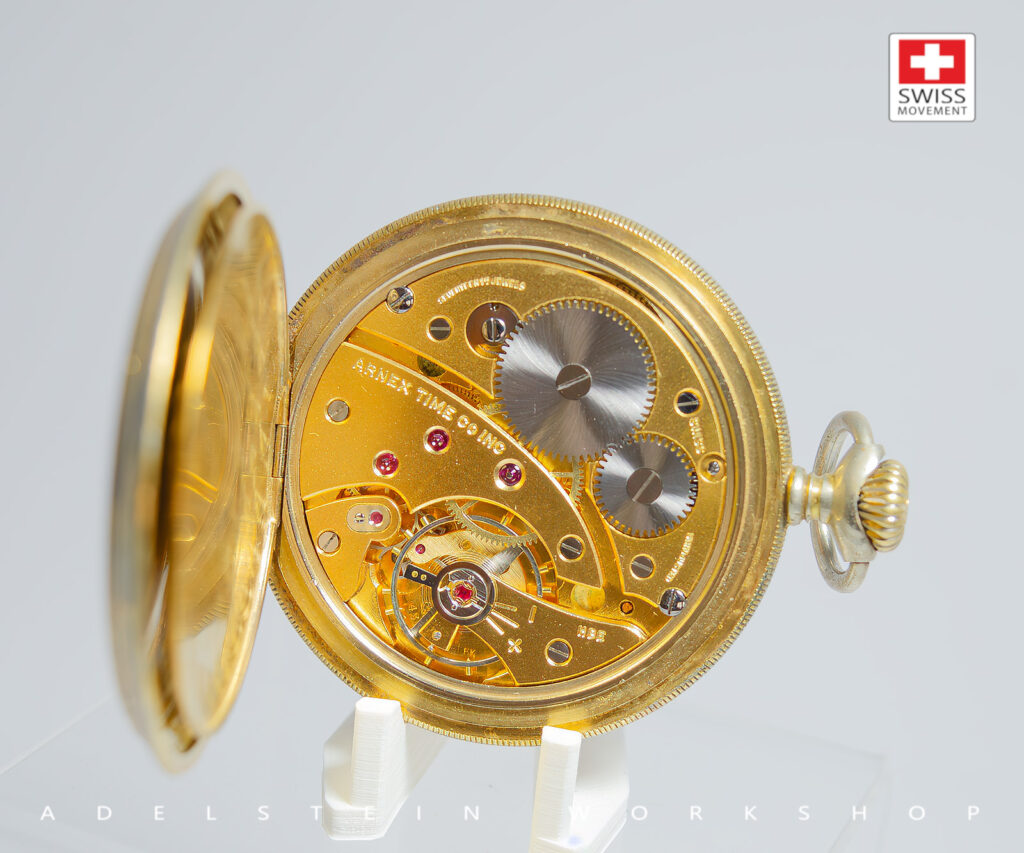
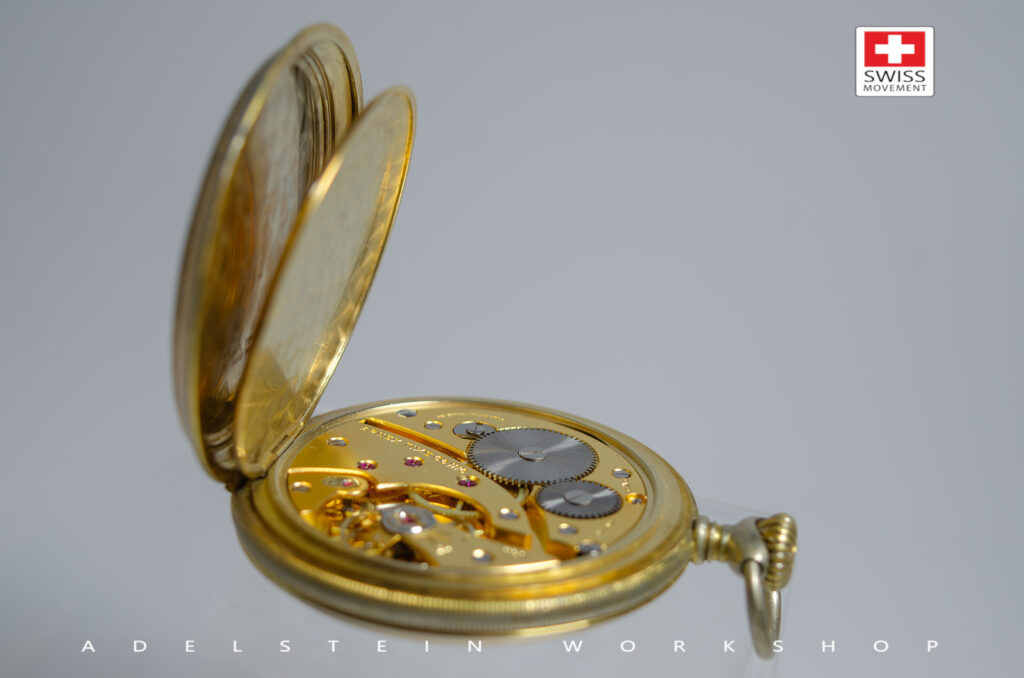
Close-up of Unitas 431 movement inside vintage Arnex watch

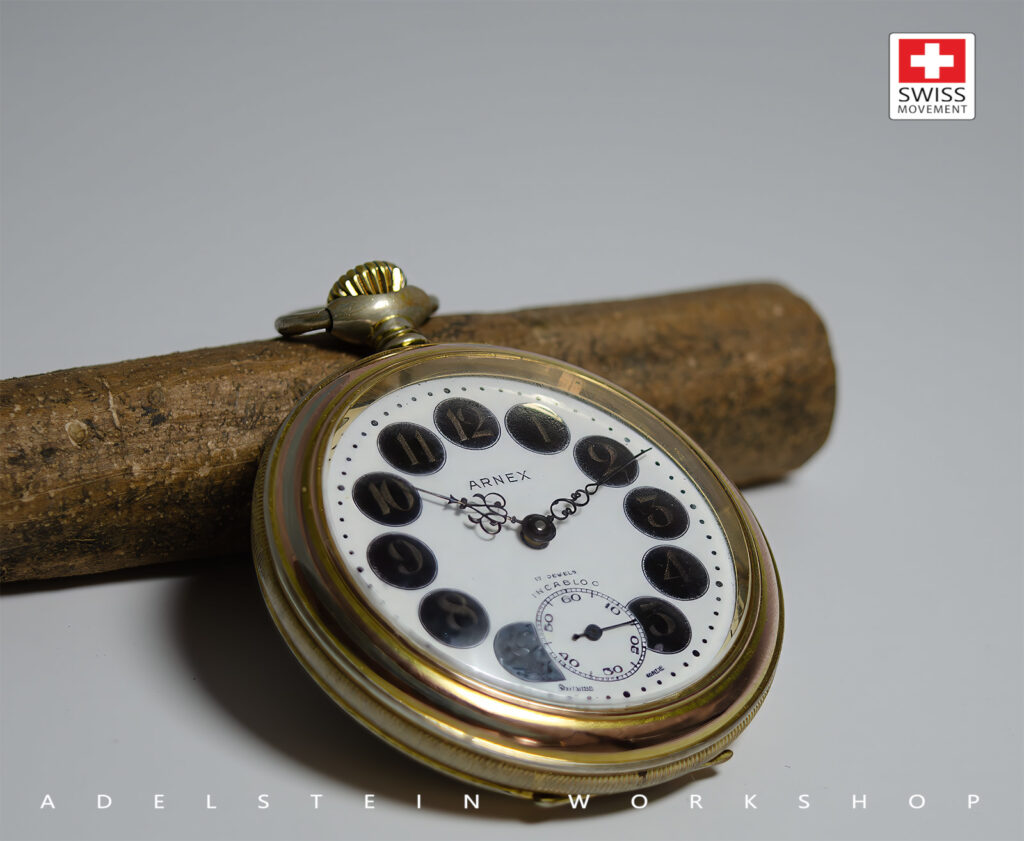
At first glance, this vintage Arnex pocket watch is elegant: a fired porcelain enamel dial with cartouche numerals, a bronze open-face case, and the unmistakable charm of Swiss craftsmanship. But beneath the dial lies something far more intriguing—a Unitas Caliber 431, a rare and historically significant movement that elevates this watch from collectible to conversation piece.

This piece stands apart in a world where Arnex is often associated with mass-market affordability. It’s a mechanical outlier, a survivor from a transitional era in horology, and a testament to the enduring value of thoughtful restoration.

Arnex and the Swiss Export Boom

Founded in 1971 by Arnold Fuchs, Arnex SA was created with a clear mission: to produce affordable Swiss pocket watches for the American market. The company quickly scaled production, offering watches that were stylish, functional, and accessible to nearly every budget.

Arnex watches were often powered by Unitas 6497 movements—reliable, inexpensive, and easy to service. Cases were typically made from base metals, dials from printed metal or acrylic, and crystals from plastic. These watches flooded department stores and gift catalogs throughout the 1970s and early ’80s, making Arnex a household name among casual buyers.

But this watch is different.

Inside the Unitas 431 – Specs and Significance

The Unitas Caliber 431 predates Arnex itself. Produced between the 1940s and 1960s, it was designed as a significant, hand-wound movement for traditional pocket watches. With its 18.5 ligne diameter (~41.7 mm), 17 jewels, and 18,000 bph beat rate, the 431 offered smooth operation and a generous power reserve of ~41 hours.

Double back case

Unlike the later 6497 and 6498, which became ubiquitous in both pocket and wristwatches, the 431 was produced in relatively low volumes. It lacks modern features like hacking seconds or Incabloc shock protection, but its architecture is clean, robust, and highly serviceable.

The 431 Movement

Specs at a glance:

  • Movement: Unitas 431 (manual wind)
  • Jewels: 17
  • Beat Rate: 18,000 bph
  • Diameter: 41.7 mm (18.5 lignes)
  • Height: 4.7 mm
  • Functions: Hours, minutes, small seconds at 6:00
  • Stem: 988L
  • Country of Manufacture: Switzerland

A Brief Detour—Waltham’s Influence on the Era

To fully appreciate the 431’s place in horological history, we must look briefly at Waltham, the American watchmaking giant that pioneered industrialized timepiece production in the 19th century. By the 1950s, Waltham’s U.S. operations had ceased, and the brand name was licensed to Swiss firms who continued producing watches under the Waltham label.

Some of these “Swiss Walthams” were powered by the Unitas 431, moving a mechanical bridge between American branding and Swiss engineering. While this Arnex isn’t a Waltham, the 431’s presence in both brands underscores its role in a pivotal transitional era.

Why This Arnex Is So Unusual

Arnex typically used the 6497 in its pocket watches—a movement that was cheaper to produce and more widely available. The presence of a Unitas 431 in this watch is highly unusual, suggesting one of two possibilities:

Restored bronze case of Arnex pocket watch
  • Early Production: This could be an early Arnex model assembled using surplus Swiss movements before the company standardized on the 6497.
  • Special Batch or Private Label: Arnex often produced watches for other brands. This piece may have been part of a limited run or private-label order that called for a higher-grade movement.

Either way, it’s a rare configuration—and one that collectors are unlikely to encounter again.

Restoration Notes – Preserving the Past

When this watch arrived at our workshop, it was a textbook case of hidden potential. The fired porcelain enamel dial had survived beautifully, with its cartouche-style Arabic numerals still crisp and legible. The bronze case showed honest wear but retained its structural integrity.

The movement, however, needed attention. It was carefully disassembled, cleaned, and reassembled using original Swiss components. The balance was regulated, the mainspring lubricated with modern synthetic oils, and the dial and hands were preserved in their original state. No shortcuts. No compromises.

The result? A fully functional, historically significant timepiece that now ticks with the same rhythm it did half a century ago.

Why Collectors Should Pay Attention

This isn’t just a vintage pocket watch—it’s a mechanical artifact. Here’s why it matters:

  • Rarity: The 431 is seldom seen in Arnex watches, making this piece a true outlier.
  • Historical Value: It represents a transitional moment in Swiss watchmaking, when surplus movements met export-driven design.
  • Mechanical Integrity: The 431 is a joy to service and a pleasure to wind—smooth, deliberate, and built to last.
  • Aesthetic Appeal: The fired enamel dial and bronze case offer a visual warmth that modern watches can’t replicate.

For collectors, this is a chance to own something that’s both beautiful and historically meaningful.

Ownership & Care

If you’re fortunate enough to own a watch like this, here’s how to keep it ticking:

  • Winding: Daily, with gentle pressure—stop when resistance increases
  • Storage: Keep away from magnets and moisture; store dial-up in a soft pouch
  • Servicing: Every 3–5 years by a qualified watchmaker familiar with vintage calibers
  • Display: Consider a glass dome or stand to showcase the dial and movement

This isn’t just a watch—it’s a legacy.

Final Thoughts – Time, Preserved

In an era of disposable tech and digital distractions, this Arnex pocket watch offers something rare: tangible timekeeping with a soul. It’s not just about nostalgia—it’s about honoring the ingenuity, precision, and artistry that defined a generation of watchmakers.

At Watchmasters, we don’t just sell watches—we preserve legacies. And this Unitas 431-powered Arnex is one worth remembering.

For a deeper look at Arnex’s origins, see our research article on the Claude Wollman myth.

Now available from US Watch Masters:
This remanufactured Arnex 431 pocket watch is being offered exclusively to collectors via eBay.
View the listing on eBay →

Posted on

Vintage Watch Tools To Look For

Lower Your Start-up Costs with Vintage Watch Tools

In 2023, the US Bureau of Labor Statistics estimated that US firms employed about 1800 watch repairers. Compare that number, when the Saint Louis Fed estimated: “Employment of watch repairers at more than 25,000 in 1963.” They also believed, “employment opportunities will continue to be good through the 1960’s and in the longer run for experienced watch repairmen who have established reputations for doing high quality work.”

What Happened?

Of the 1800 watch repairers the US Bureau of Labor Statistics identified in 2023, most worked for manufacturers. A few had their own shops and considered themselves independent contractors accepting work from various jewelry stores and from individuals through the Internet.

On March 26, 2023, the New York Times ran an article entitled, Can’t Buy the Watch You Want? It’s Partly a Lack of Watchmakers. The subtitle read:  With student enrollments down and retirements rising, Swiss brands worry that growth will stall.

The first two paragraphs by Roberta Naas read:

“The watchmaking world is facing an unprecedented problem: a severe lack of watchmakers who can build and repair timepieces as well as technicians, engineers and other skilled workers. That has contributed to such severe supply problems that they could stall growth, especially at top-end brands.

“There is a true shortage of manpower,” Aurélie Streit, vice president of the Fondation de la Haute Horlogerie, said during a recent video interview from the organization’s Geneva headquarters. “Not only watchmakers, but also specialists in the 15 other watchmaking jobs, from precision mechanics to engineers, finishers, polishers, research and development,

Who Will Fill the Gap?

In the US and Europe, hobbyists have taken to watch restoring. The evidence exists on watch forums such as watchyouseek.com and in the UK at WatchRepairTalk. YouTube has seen a large influx of watch repair “how to” videos from around the globe. Even

Posted on

Watchmaker Staking Tool Sets

Watchmaker Staking Tool Sets

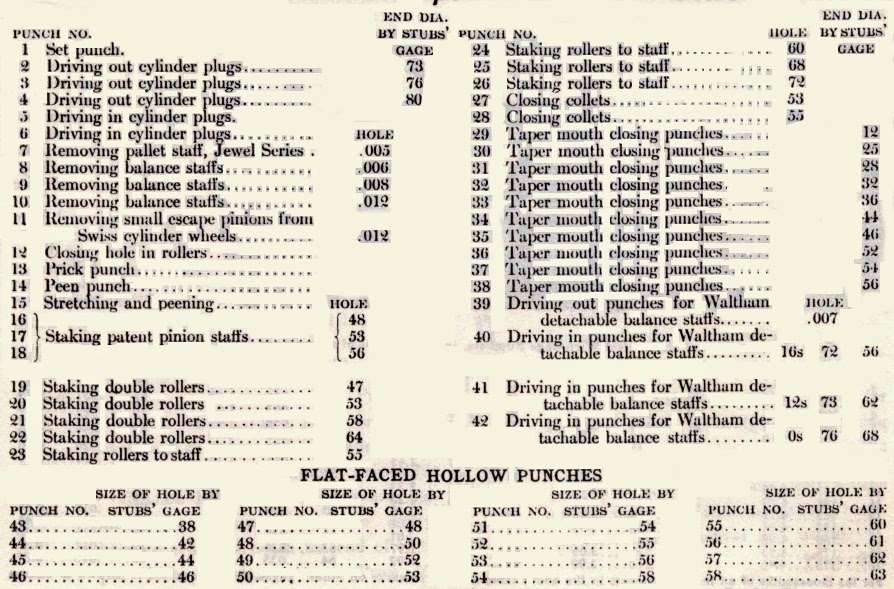
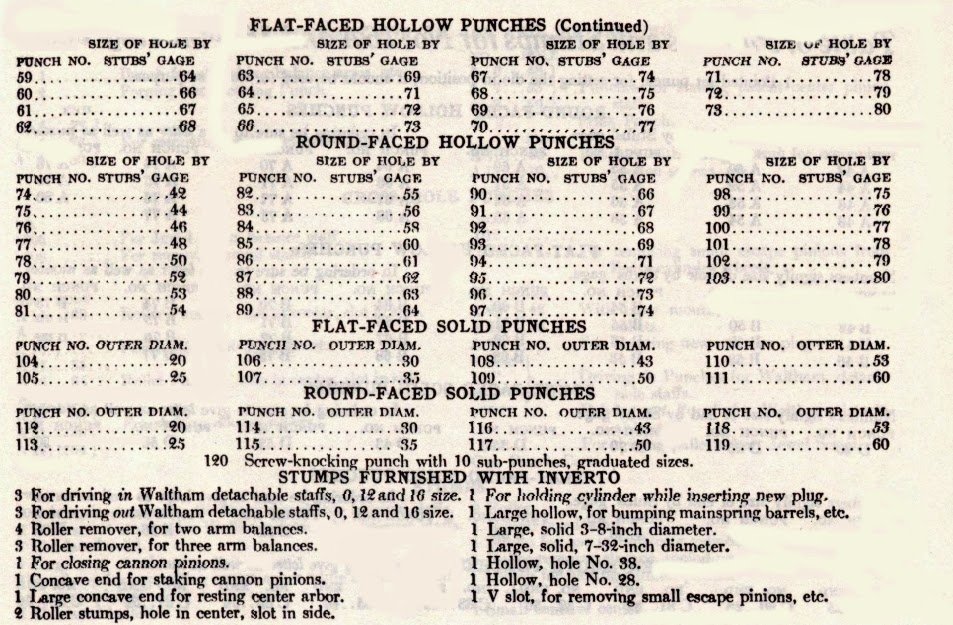
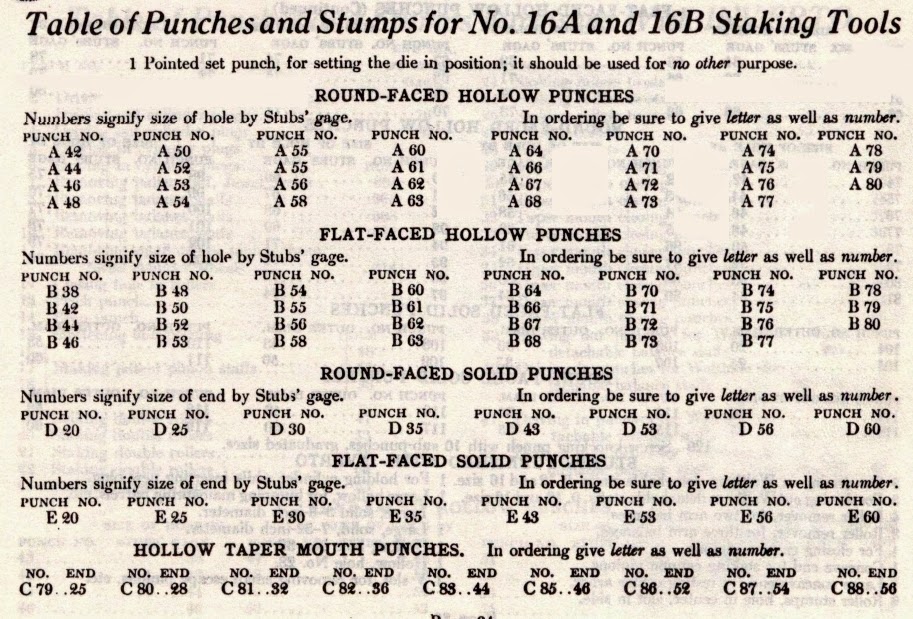
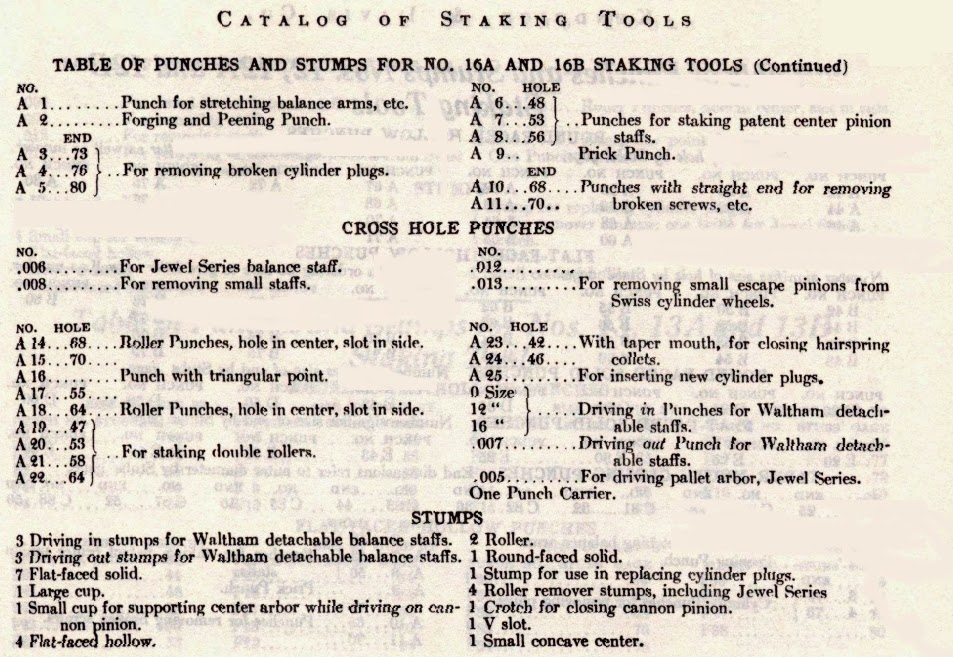
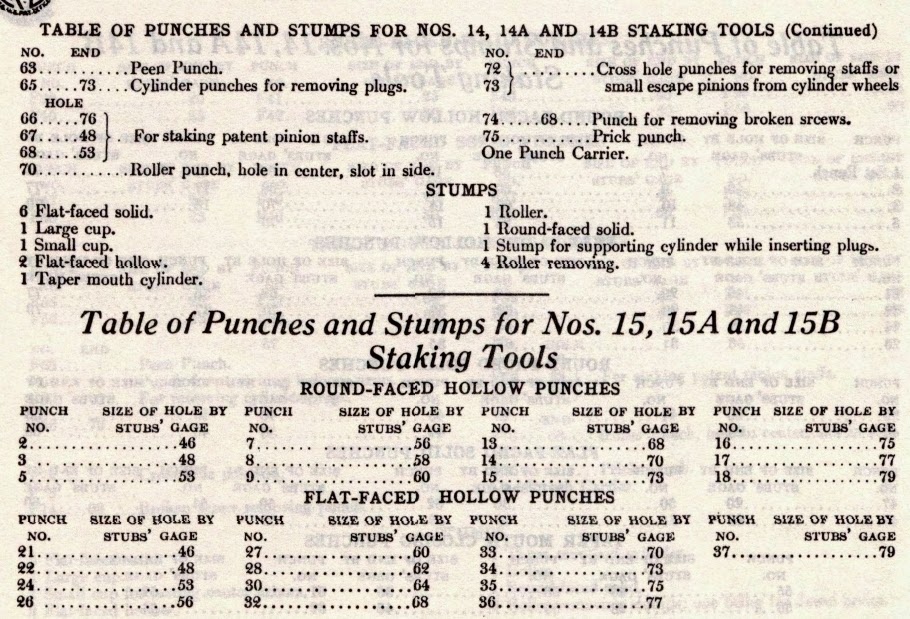
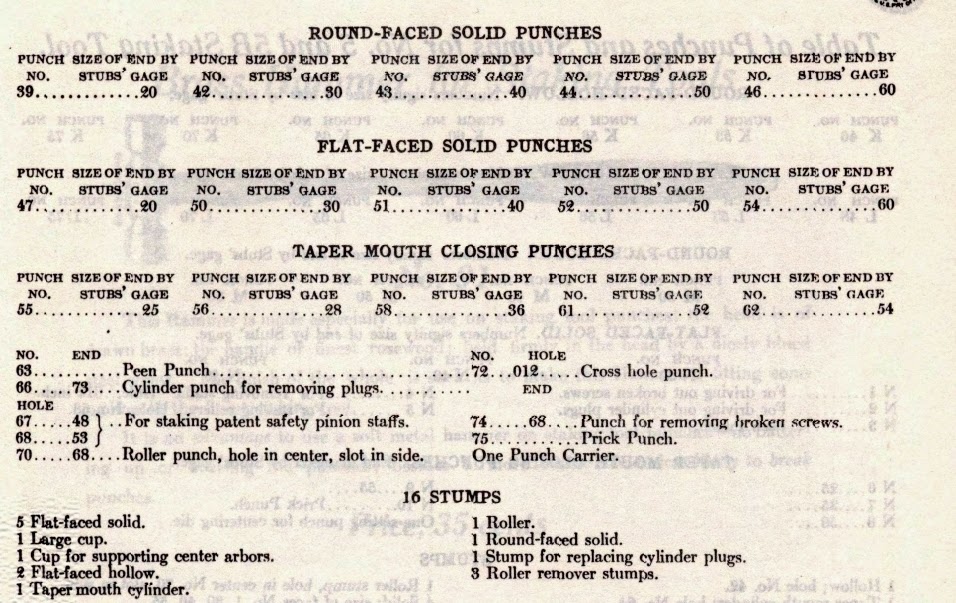
Punches and Stumps Reference

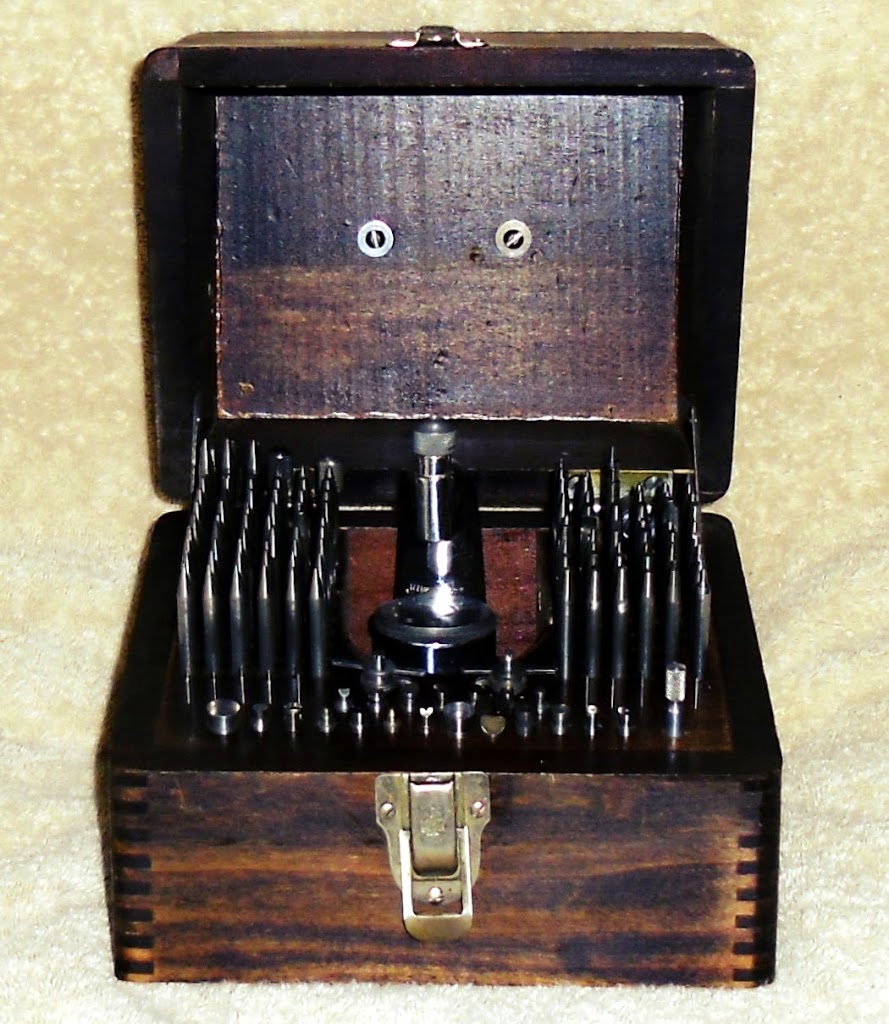
Vintage watch collectors see Kendrick and Davis (K&D) tools as the height of value. because the company revolutionized the repair and service industry with innovations. For example, they invented the Inverto staking frame, canon pinion removers and balance tools. Today, watchmakers like me can use tools K&D made in the early 1900’s especially watchmaker staking tool sets.

The company dominated the market in terms the number of tools sold, and I have their staking tools, bench blocks, balance screw holders and canon pinion removers. Why? I cannot find new tools to accomplish the same tasks.

Before quartz watches and replaceable movements became available, US jewelers and watch companies (like Hamilton, Elgin and Bulova) employed about 65,000 watchmakers. and the United States had robust competitive suppliers called parts houses. Today, only about 1800 watchmakers work in the industry according to Kansas City Federal Reserve Bank. Tool manufacturers just do not find the US market and more.

In the early years, companies innovated, but few made their components backward compatible. Also, documentation doesn’t exist for cross referencing. I searched and found materials for my own use and chose to make them available to my readers.

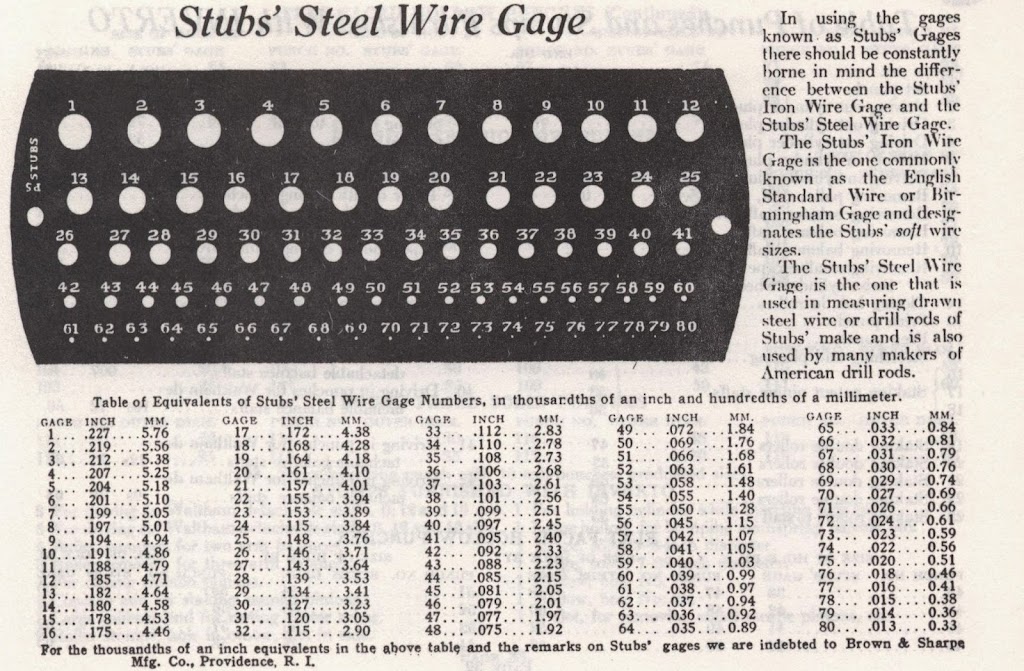
Stubs to Inch to MM conversion chart 
[click to enlarge]
What’s the size of the stakes in your set?

This article exists to provide you with the various reference numbers of staking set punches and stumps made by Kendrick and David for their respective frames and other tools.

Over their 98-year history, the company made only a few models. You can use the information here to make purchase decisions.

I use preowned watch tools. Hopefully, this information will help watchmakers and collectors identify their holdings.

Kendrick & Davis referred to their first staking set as No. 5 and it came with 32 punches and 8 stumps, which they wrote about in their catalog and said that the 5 and 5B were the same as the Hall Staking Tool. It did not have a die binding mechanism or the sustaining friction sleeve.

K & D produced a second model known as the “New Design” but the new design came in five configurations. They included the following:

No. 12  100 punches, 24 stumps
No. 13    76    ”           20     “
No. 14    60   ”            18     “
No. 15    50  ”             14     “

They bundled the Models 12 -15 with a revolving base or a box and also offered a handle, known as an AH.  The Model 16 came later with 120 punches and 30 stumps.

Staking Tools and How to Use Them by Kendall & Davis Co. Full 163 Page Version – Adelstein-Workshop

When they changed to their Inverto Models 17 and 18, the frames looked the same as later models having a knurled punch sustainer or knob at the top of the sleeve which secured a punch from moving.

You can find models included the 17, 18B and 18R plus the 600 series still in existence. The box can confuse since most of they have the model 18 on the name plate regardless of what’s inside.

Punches and Stumps

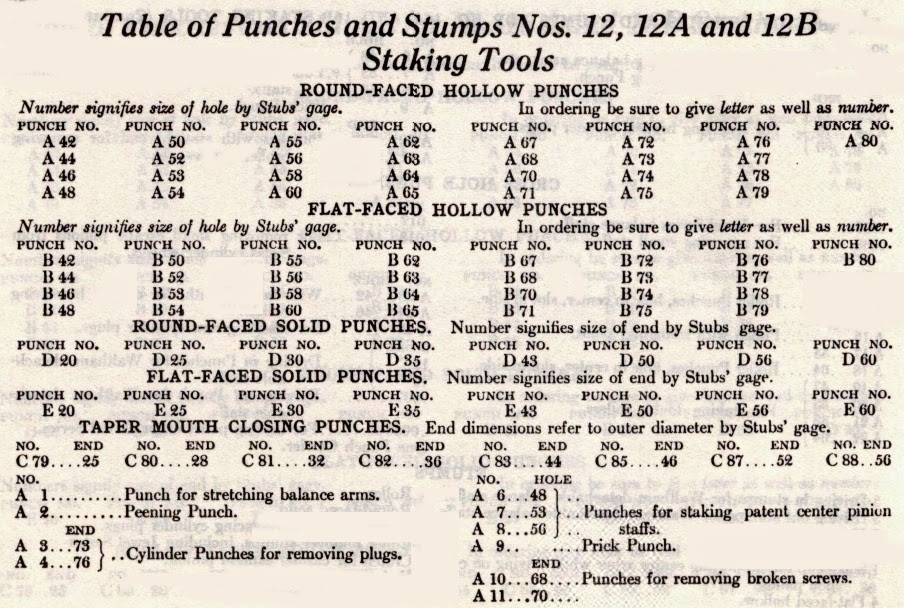
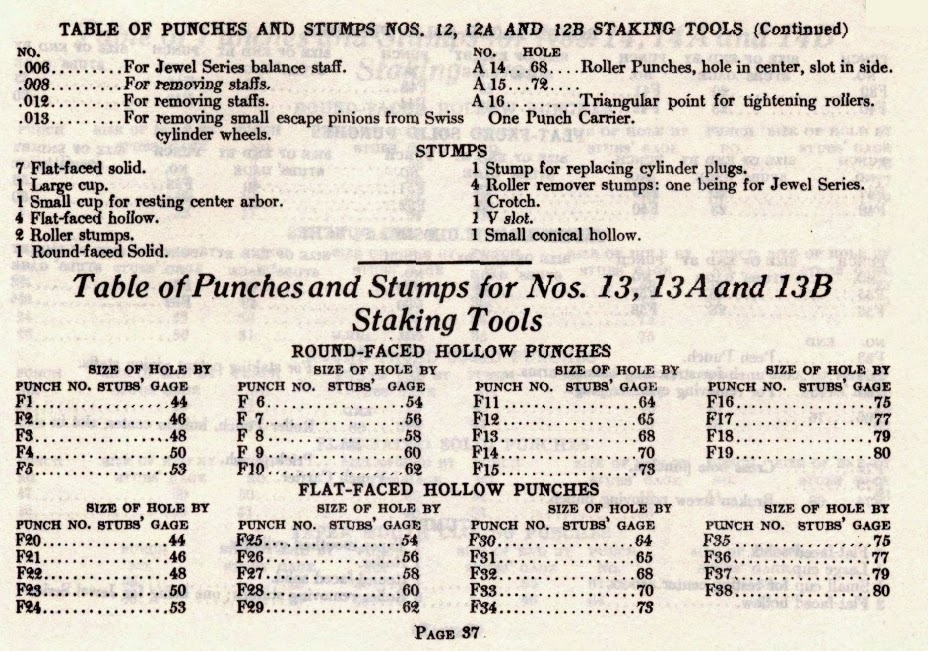
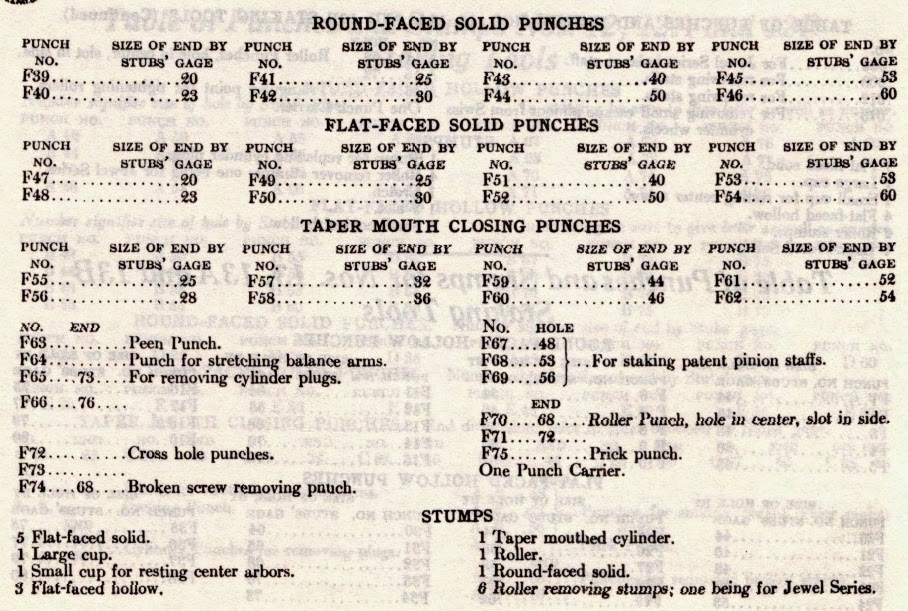
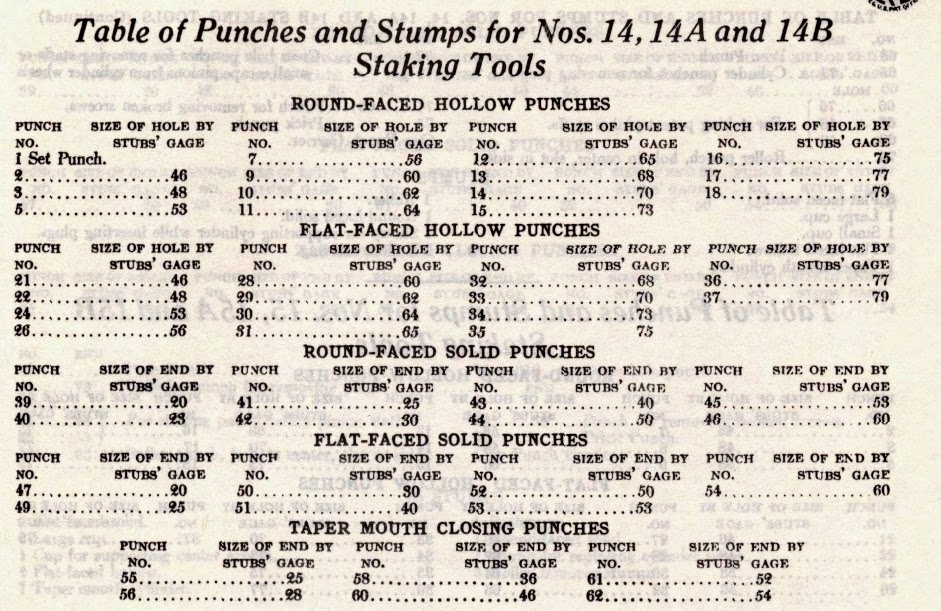
If you buy a staking set, more likely than not, you will find punches of different sizes with different numbering systems. For example, a round face hollow punch with a .045 mm hole might be stamped 83 K&D, A 56 K&D or simply 7. Also, those punches can differ in length to fit the frame model from which they came. For example, the Inverto punches have the shorter length.

Another twist in numbering comes with the New Design model frame. Models 12, 13 and 16 use the letter number format (A xx), while 14 and 15 use the Inverto number format (xx K&D).

The company does not make staking sets as of 1998, so anything you buy will be used watchmaker staking tool tets. More likely than not, you will find a mixture of punches with different numbering schemes in your sets. That’s not always the case, but you might want to examine the charts listed below. Focus on the Stubs Chart above. The older punches use the Stubs steel wire measure and later ones use millimeters.

K&D used Stubs Steel Wire gauge to identify the size of the hole in early punches and millimeters in later models. In a some cases, K&D used the same number on different punches.

The stumps also differed according to era. When pocket watches prevailed, the stumps had different shapes and sizes than when bracelets (strap or wrist watches) came into vogue. Inverto sets used different punches than “Specials” and “New Designs”.

In my pile of punches and stumps, I have found other branded ones, especially Moseley, Boley, GF and Swiss Standard. It took a couple of years, but I found some conversion charts for punches and cobbled several charts together.

Back to the company. You find size and type charts for K&D punches and stubs.

Punches for Inverto No. 17, 17 A, 18, 18A
 
Punches for 16A & B
Punches and Stumps for 16 A & B
 
Punches and Stumps for 12, 12A and 12B
Punches and Stumps for 13, 13A and 13B
Punches and Stumps for 14, 14A and 14B
Punches and Stumps for 15, 15A and 15B

[Click on an image to enlarge]

Posted on

Hamilton Watch Company Technical Data (How-to Service Bulletins) 1930-1948 DOWNLOAD

I lost track of the number of times I needed help with repairs on old Hamilton wristwatches. For ten years, I searched for service manuals and had no luck. I expected a handbook and now I know that the company never printed one. Instead, Hamilton issued service bulletins, known as Technical Bulletin.

In 2011, I moved to Paris, TX to attend watch school at the Texas Institute of Jewelry and Horology. Unfortunately, Department regulations prohibited any variance from existing curriculum, and Hamilton movements did not exist in the syllabus.

I have yet to find all the Technical Data Bulletins Hamilton published. I did find most of the TD’s and included them in the PDF below.  I haven’t found TD105 or TD106, yet. If I do find them, I will add them as soon as possible and update this page.
Please feel free to download the 46+ page PDF at this link: Hamilton Technical Data (Bulletins).
The download is free. 
Enjoy!
Tom
Posted on

Watchmakers Staking Tool Conversion Chart Punches – PDF Download – UPDATED

I can count the number of times I needed a punch to stake a balance staff and didn’t have the exact size I needed in my K&D set. I had dozens of  punches made by other manufacturers. I had to eye-ball them until I saw one that came close.

I could have saved hours of sorting through stakes, if I had a conversion chart. I had Boley, Marshall, Bergeon and others. I had a feeling I could match the numbers up if I found catalogs with sizes and shapes.

It took weeks to find the catalogs (especially the ones from Europe) but I did it. Then I had to match the various punches and I did.

I used Microsoft Excel and created a table and filled it cell by cell. I don’t horde and I know that many of my friends and customers would like this chart. I’m making it available to you.

Here it is:

Complete Staking Punch Conversion Table – Free PDF download.

I hope this helps you in your endeavors to use tools successfully.

Posted on

Staking Tools and How to Use Them by Kendall & Davis Co. Full 163 Page Version


Why is this book so scarce? 

Collectors have bought them up, people have not returned them to libraries, they deteriorated in watchmaker shops or people threw them away. If you don’t recall, K&D printed this book as a catalog. They added the “how to” as a bonus to bring in orders for their products. I don’t believe the people at K&D expected it to become the definitive book on staking tools.

Right click link to download:

Staking Tools and How to Use Them 1910 – 163p BW – S.pdf (adelstein-workshop.com)


Why hasn’t someone reprinted it?

People have printed several versions of this book over the years without permission. K&D reprinted parts of the second half – known as “the last 50 pages” – in other catalogs. The last purported owner of the company implied that he only reprinted the second half because the original products were extinct.

What exactly does this book contain that’s so important?

When I think about this question, I remember how little watchmakers tools have changed since the Gilded Age. K&D already had the Inverto when the book became available. You have the opportunity to see their entire line of staking tools. That’s an extensive amount of information. At the time, the company already had the models 17 and 18 – (though very different than the ones we see today).

K&D explained the various punches and why the Inverto convention changed the length of the punches and the necessity for every stump.

It helped one identify the different numbering schemes. For example, the original scheme used a number, such as 10. Next, the “New Design” or 500 series used a letter – number scheme such as A14. After the Inverto, the scheme had sequential numbers with a “K&D” imprint, such as 40 K&D. The book provides information about each type of punch and the size or diameter of the hole or punch end.

They also explain the use of each punch and stump. That’s important information. Then they explain the different jobs that the watchmaker can accomplish with the different tools. They also explain how to do each job.

Posted on

K&D Kendrick and Davis Balance Tools for Truing, Poising and Staffing

Do you ever venture over to the section known as watch tools on eBay? If you have, you’ll notice it’s a busy market. You can find it by navigating from All categories to Jewelry and Watches, then select work your way through all the sponsored headings and hopefully, you will find a listing of vintage tools. To save you the trouble, here’s a link:

I used to just check the preowned section under “Condition” and suddenly all the used watch tools appeared. Then I select the gallery view up in the right corner.

Once you get there, you mind find it mind-boggling.

If you don’t know what you are doing, you face a huge disadvantage if you want to shop in the watch tools and repair kit area. Who knows if the prices are fair? Which tools go together? What if it’s broken?

For the reasons mentioned above, I put kits together to accomplish specific tasks. Aside from my own knowledge, I look at books from Fried, De Carle, the Chicao Watch School, Joseph Bulova’s  Watch School manual and Technical Guides from Hamilton, Elgin and so forth. I want to know what you’re reading. Are my kits perfect? Probably not, but they are complete and the prices are fair.You won’t buy a $10 screw cutter for $55 because someone found a watchmaker’s estate when cruising flea markets and garage sales and thought they struck it rich.

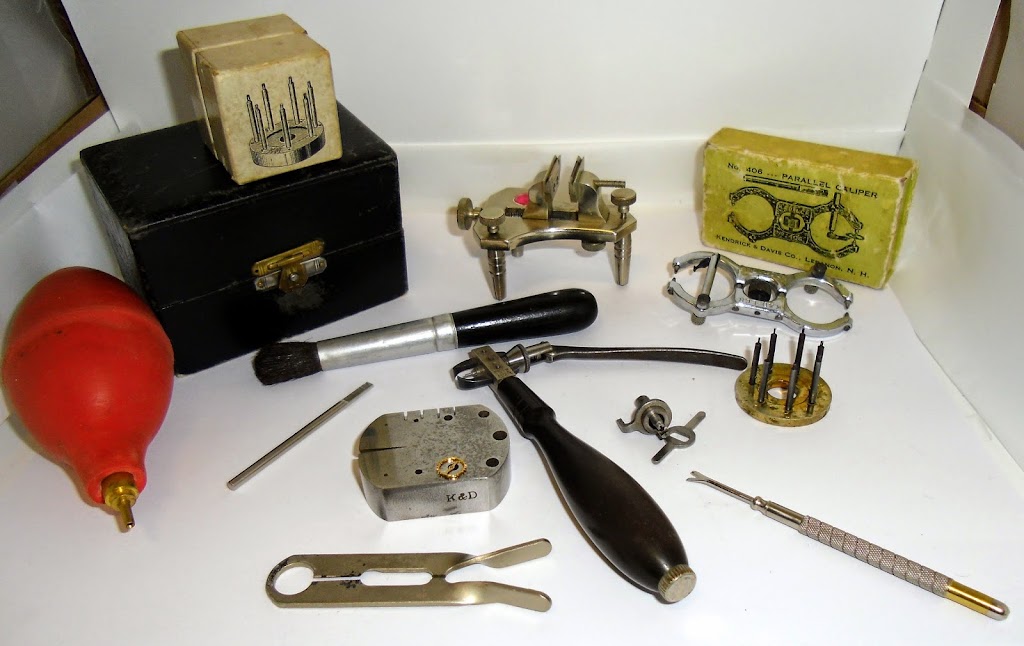
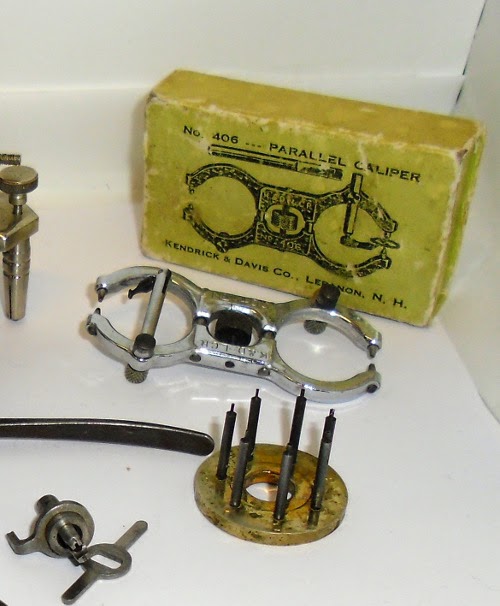
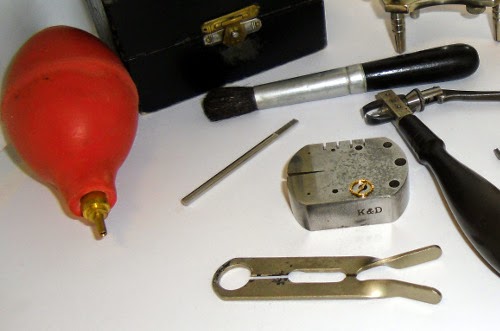
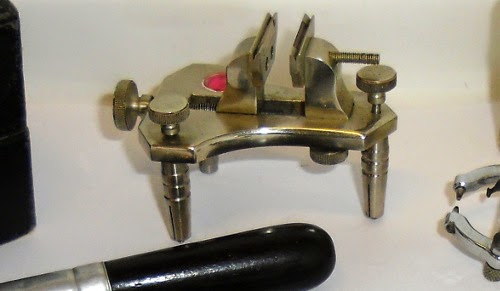
This kit is designed to let you work on watch balances. The tools help you remove the hairspring, the roller table and a broken staff. When you replace a broken staff, you’ll need staking tools, which I’m not offering in this kit. After replacing the staff, you will use tools in this kit to true and poise the the balance wheel before re-installing it.

Here’s what I included:

  • K&D Collet Remover Fork to remove Hairspring
  • Hammel, Riglander V-Shape Table Remover for Large to Medium Size Roller Tables
  • Large K&D Table Remover with Handle Lever for Pocket Watches and Large Caliber Straps
  • Staking Block for Positioning and Holding Balance 
  • Adjustable K&D Roller Remover for Staking Frame for Small to Medium Size Bracelet, Strap and Smaller Pendants 
  • Screw Undercutters for Poising Balance Wheels
  • K&D Calipers For Truing the Balance 
  • Caliper Brush used with Truing Calipers
  • Hammel Riglander Poising Tool  with Jeweled Jaws-  no chips 
  • Air blower – Light Stream Control for Poising Tool
  • Balance Adjusting Wrench to Straight Wheels with Truing

Normally,you would have to assemble a balance tool set by purchasing them separately. In many cases, some of these tools do not show up for as long as one year. I understand since I assembled it.

Why these tools? As I wrote above, these provide you with the items you need to accomplish that task.

If you want to use this list as a guide, be my guest. Any of the books you read about repairing watches, will have you use tools like these or similar – the things you need to get the job done. If you want to see this offering at eBay, click here.