Directions
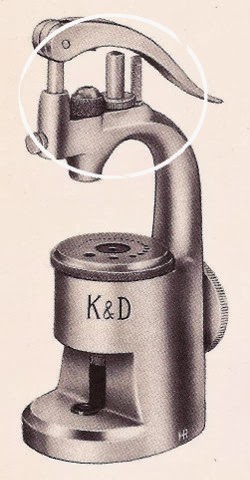
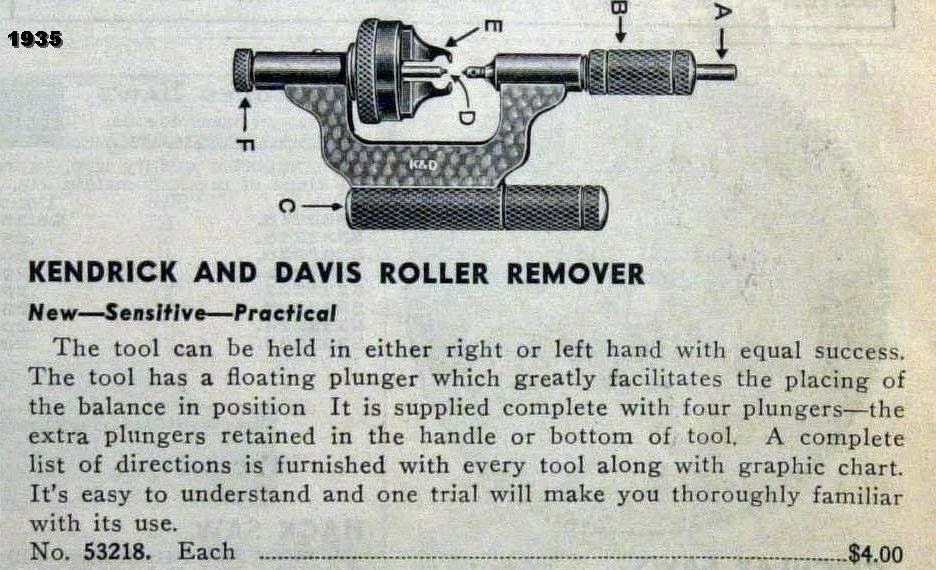
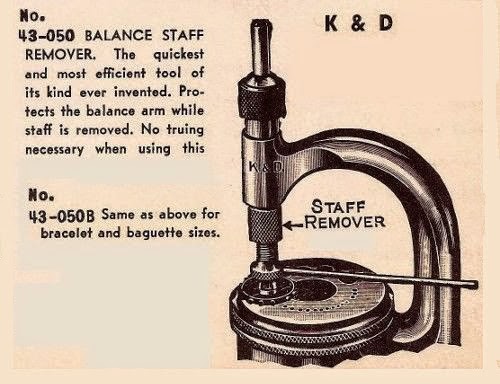
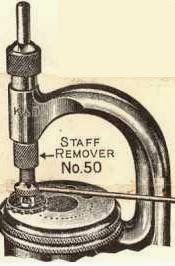
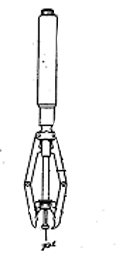
Select proper hole in Staking Tool die to let hub of staff through: place balance with staff to be removed in same. Set remover over same and insert its pu!1ch through staking tool and
main body of remover. Holding punch in position over.. pivot with finger of right hand tighten knurled remover nut upwards against staking tool arm.
Stop arm of remover will swing against body of Staking Tool and prevent body of tool turning while tightening knurled sleeve. Do not over tighten this sleeve:
it is not necessary. Now strike punch a sharp blow with light hammer and staff will come
out without injury to Balance; riveting of staff simply being sheared off.
NO. 50 BALANCE STAFF REMOVER
In ordering our No. 50 measure the gap between your Staking Tool die and bottom of Goose Neck. Table below will show the size
No. 50 which will fit your Staking Tool.
“K.& D” No. 50 Will fit any S. T. Staking Tools No. Sizes Die Gap of #18 Series #600 Series
1 1-8in. ‘7-8in. 1 3.16in. 1 1-16in.
All the above No. 50 sizes can be furnished for Bracelet size Balances but in ordering add
the letter “B”.
Tag: Articles
K&D (Kendrick and Davis) Staking Tools – Identification and Information Series: 16AH
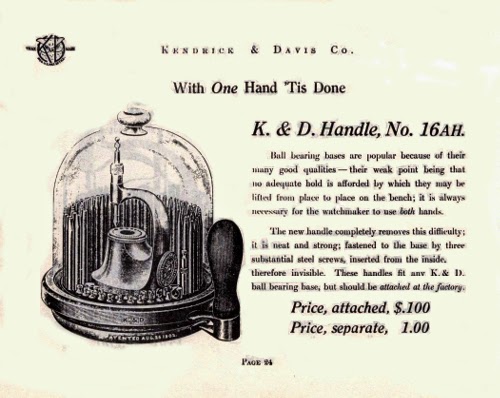
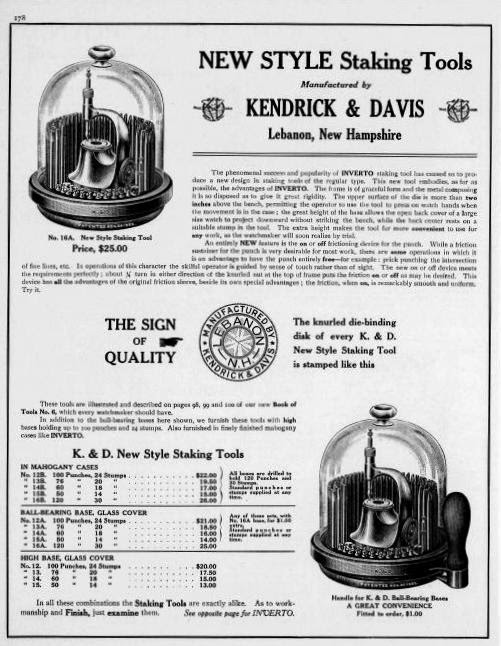
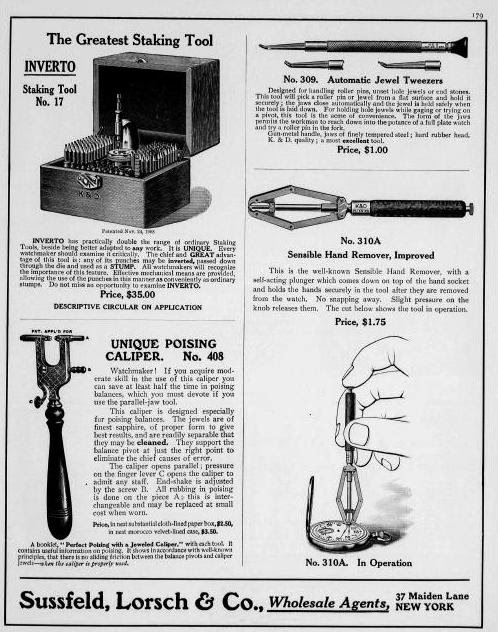
In 1909, K&D build numerous versions of its staking sets. Each version filled a specific need. The text in this advertisement explains the advantage of two features the company offered.
The Text Reads:
![]() |
| [Click on Image to Enlarge] |
Ball bearing bases are popular because their many good qualities – their weak point being that no adequate hold is afforded by which they may be lifted from place to place on the bench; it is always necessary for the watchmaker to use both hands.
The new handle completely removes this difficulty; it is neat and strong; fastened to the base by three substantial steel screws, inserted from the inside, therefore, invisible. These handles fit any K.& D. ball bearing base, but should be attached at the factory.
The standard staking sets came in either a wooden box or the dome covered round bases of which three existed. Variations of the following sets came with these frames:
Inverto No. 17
Inverto No. 18 with On or Off Punch sustaining Device
Inverto No. 17 A and 18A on ball bearing bases
New Design, but not Inverto: No. 12B, 13B, 14B, 15B, 16B
Without die binding and friction sleeve: No. 5 and 5B
The 16A & 16B used the punches you may find with a letter preceding a number. For example,
A 1 Stretching balance arms
B42 Flat Faced Hollow Punches
C79 Taper Mouth Closing Punch
The lettered punches are longer than the Inverto punches, e.g., No. 44. K&D had to shorten the punches to work with the Inverto frames.
Kendrick & Davis K&D Friction Jeweling Tools for the 18R Deluxe & a Tutorial
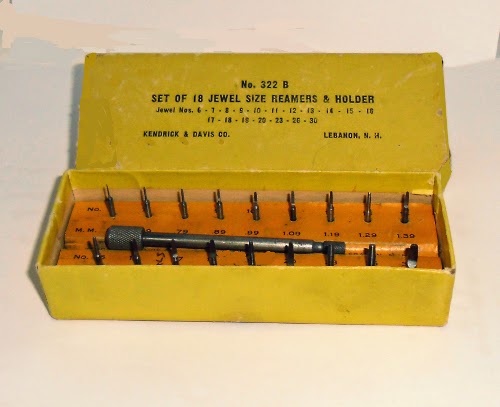
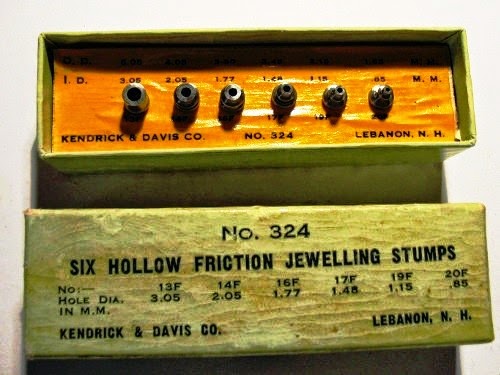
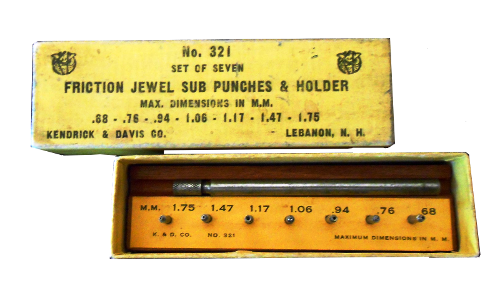
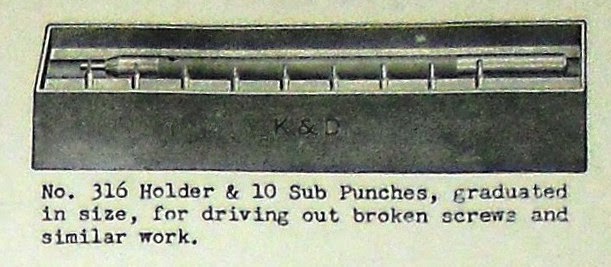
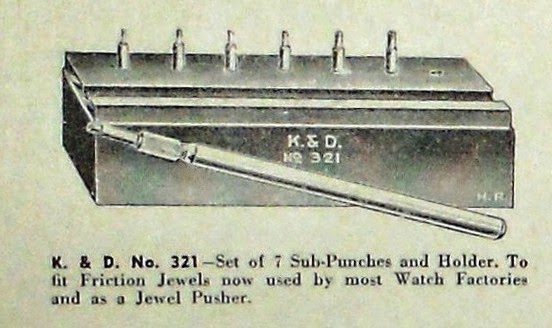
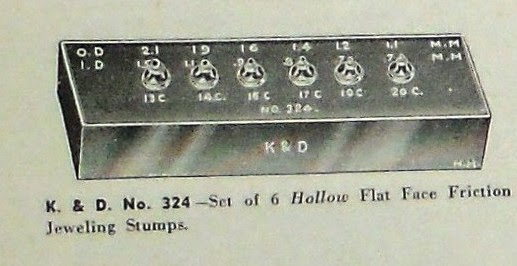
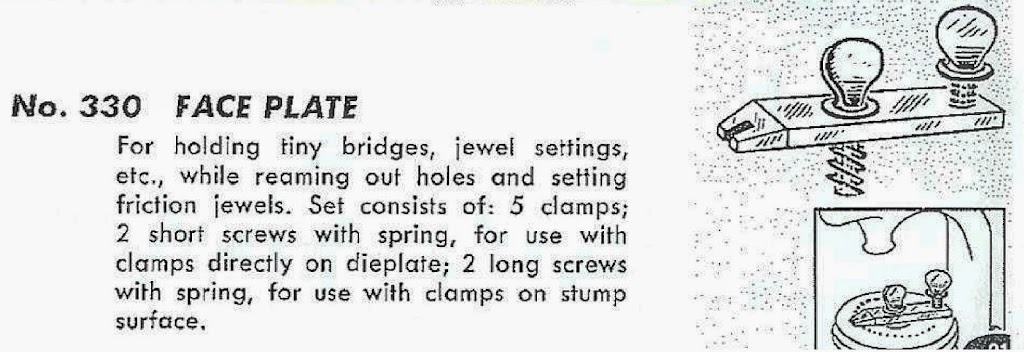
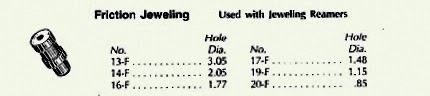
The K&D Model 18R Deluxe came with three separate jeweling sets. They include those pictured below:
- 321 – Seven Friction Jewel Subpunches
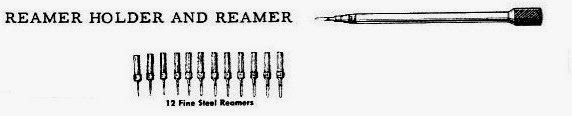
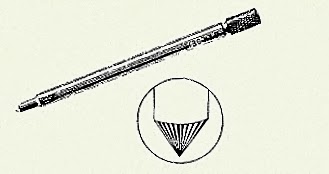
- 322B – 18 Jewel Size Reamers and Holder
- 324 – Six Hollow Friction Jeweling Stumps
I bought these sets separately. I don’t like the 18R box as it created difficulty when I reached for punches. The
I also prefer the 600 series and the No. 17
Below is a tutorial I posted in an earlier post. It may help you understand the use of these tools.
What’s Friction Jeweling any way?
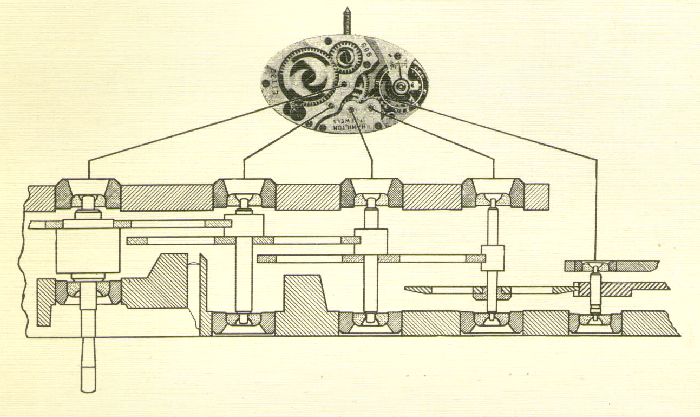
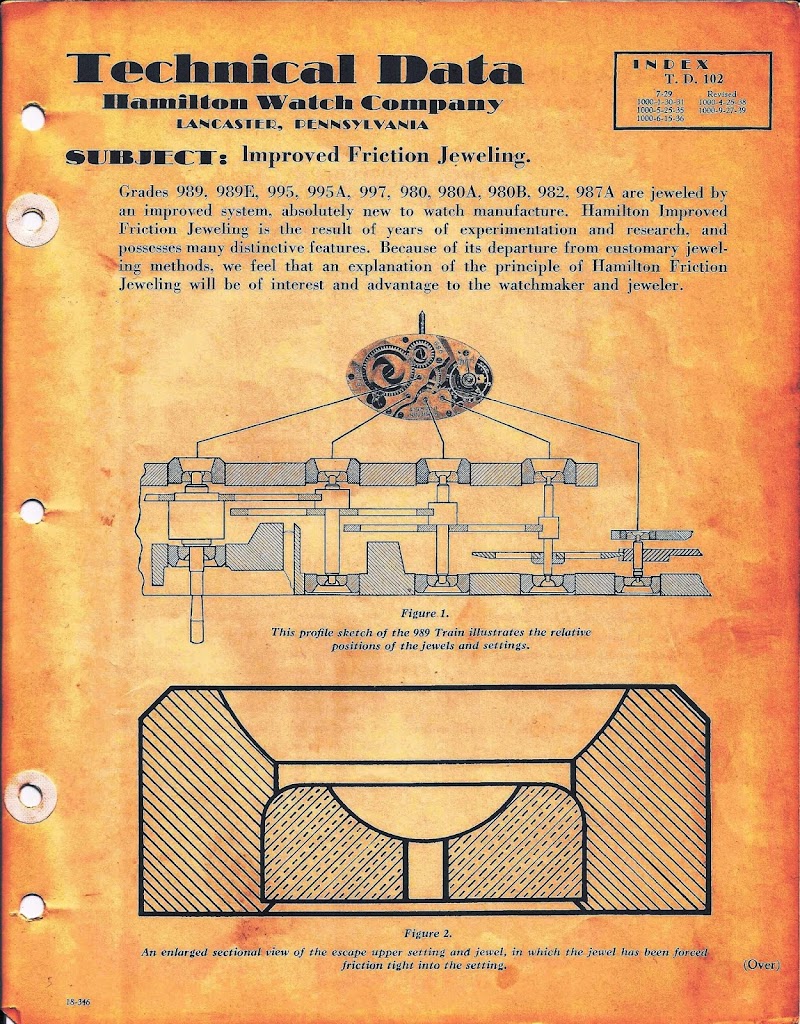
In 1924, Hamilton took credit for the first improvement in jeweling since Nicolas Facio patented the use of jewels in watches in 1704. Hamilton called their system “improved jeweling”. Now, the Swiss claim they invented friction jeweling, but they haven’t produced any names or dates to substantiate their claim that I can find.
Let’s look at what Hamilton said. First, they claimed that as a result of years of experimentation and research, that they came up with the “Hamilton Improved Friction Jeweling” method.
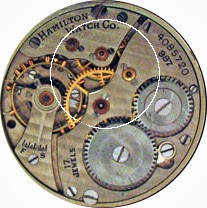
They then demonstrated it on the 989 18/0 watch movement.
While difficult to decipher from the image above, the 989 did not have bezel rings holding their jewels in place. You can see the difference in the two types of jeweling methods in the photos below.
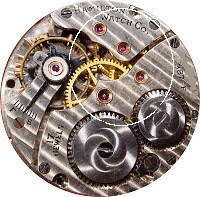
Hamilton released its first 987 caliber wristwatch movement with beveled
Little information exists
In this small post, we can look at how K&D and Moseley recommended replacing friction jewels.
The method for replacing a broken or dysfunctional jewel involves:
- Measuring
- Knocking out the old jewel and
- Setting a new jewel.
Once you discover the simplicity of friction jeweling, anxiety about it will fade. Let’s go through the steps so we can move forward in our understanding of watch maintenance and repair.
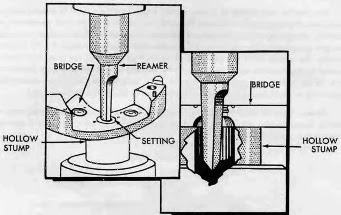
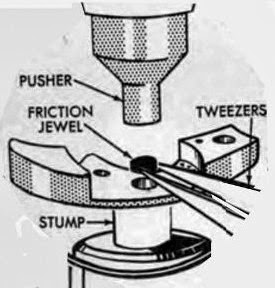
1. Select a jeweling stump with a hole larger than the jewel needing replacement. Place the stump in the die plate of your staking tool and center.
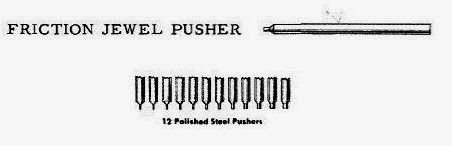
2. Select a pusher smaller than the jewel needing replacement. Place the pusher in its holder and secure it in the frame sleeve.
![]() |
3. With the exception of Balance Jewels, use the pusher to adjust the micrometer. For example, place a watch bridge on the stump facing up. Rest the pusher on the old jewel and adjust your micrometer to limit the movement of the pusher. Jot down the setting on a piece of paper and use it when setting the depth for the replacement jewel.
4. Lower the micrometer stop and press on the old jewel to remove it.
5. If you have
6. If you need to refinish the hole, pick out one of the reamers. Make sure it is
7. You can now ream the jewel hole for your replacement jewel.
8. Again, use the holder for the reamer and place it through the staking frame’s sleeve.
9. Don’t let the reamer go further than a millimeter into the hole.
10. Turn it to create a smooth and appropriate size hole.
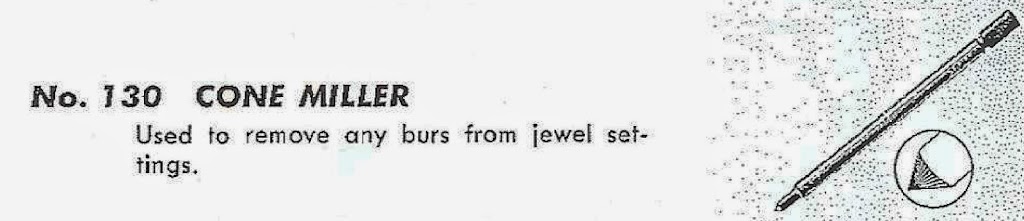
11. Use a cone miller to remove any burrs from the edges of the hole.
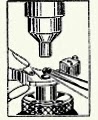
12. Now, you can place the jewel in the reamed out hole. Make sure the oil
13. Use the pusher from step 2. Set the micrometer as you did in step 3.
14. Rest the pusher on
15. Check to see if the watch part using the hole has a proper end-shake. You’ll need to rely on whatever literature exists for your watch.
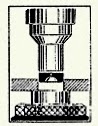
16. If you have to reset the jewel, adjust the micrometer stop and reset the jewel.
17. If friction type settings are loose in the plates or bridges of your watch, you’ll need to tighten it by closing the hole.
18. Use a taper mouth closing punch. (K&D punches 31 through 38A. Moseley E1 through E9).
19. A taper mouth closing punch draws soft metal in and reduced the size of the a jewel hole.
20. Select a punch slightly smaller than the setting.
21. Place the setting on a flat face stump, center it and tap the punch. You will see a groove that will help create a tight fit. Proceed at a slow pace as this tightening process will incorporate trial and error.
I wrote this as a high level view of the jeweling process. The entire scope of jeweling is a body of knowledge in itself. Never-the-less, I found this information helpful. It took the mystery out of the process for me.
[Click on image to enlarge]
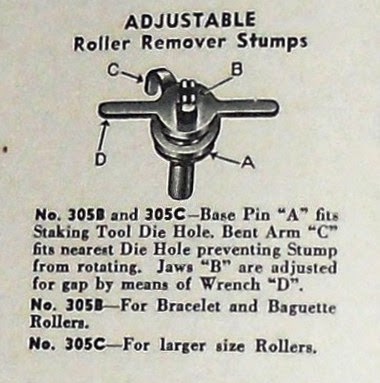
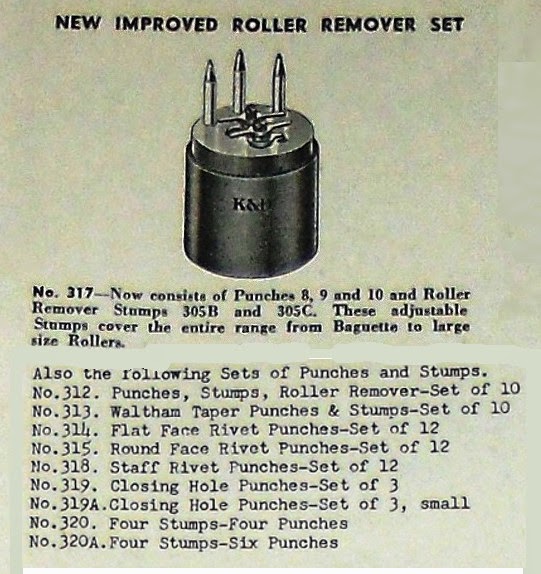
Adjustable Roller Removers and the Kendrick & Davis K&D Model 305 v Rex
Students of horology tend to focus on mechanical watches. I didn’t work on a quartz movement for years and when I did, it reminded me of “electric shop” in high school. Watchmakers have a fascination with mechanical movements and that means escape mechanisms and specifically the balance wheel.
Most of the work I have done in restoration involves replacing balance staffs. If you can re-staff a balance, you can by broken watches on eBay inexpensively. I’m trying to keep away from the word cheap.
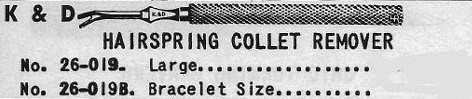
Most of the Hamilton watches I purchase have broken balance staffs. That means removing the balance assembly, the collet and hairspring and the roller table. Not many tools for removing collets exist. I use a K&D collet fork for pocket watches (size 12-18) and a Bergeon for bracelets (size 0-22/0).
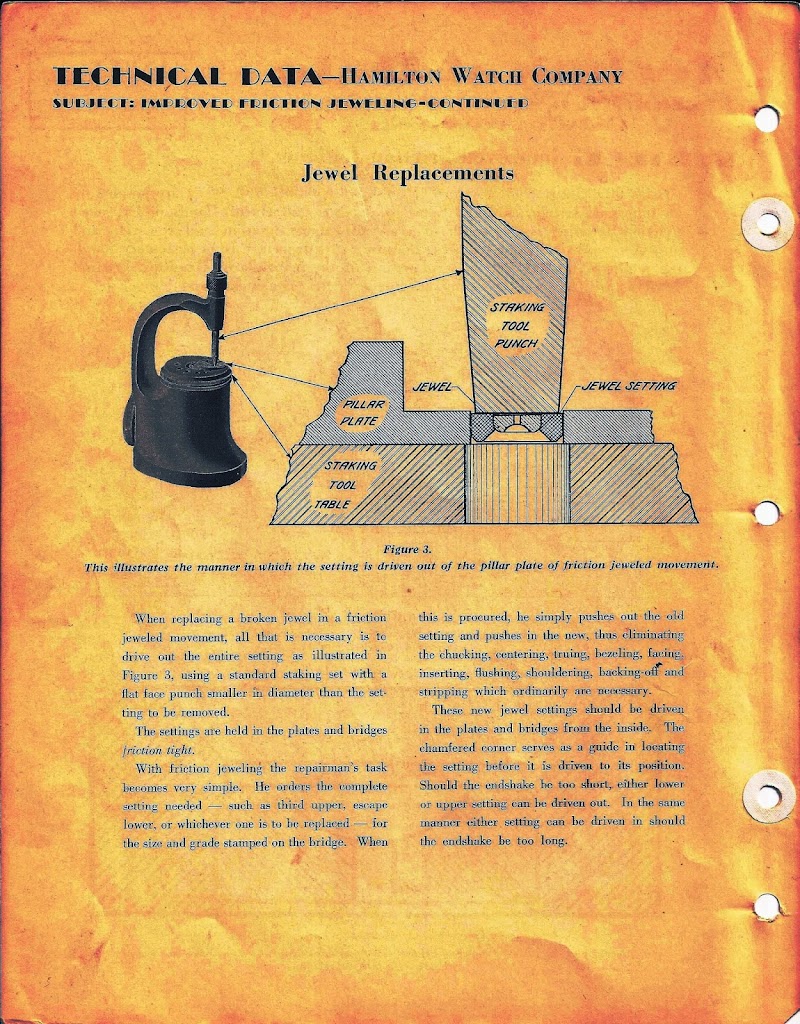
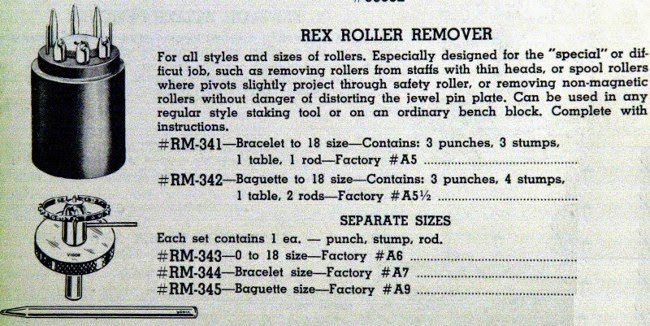
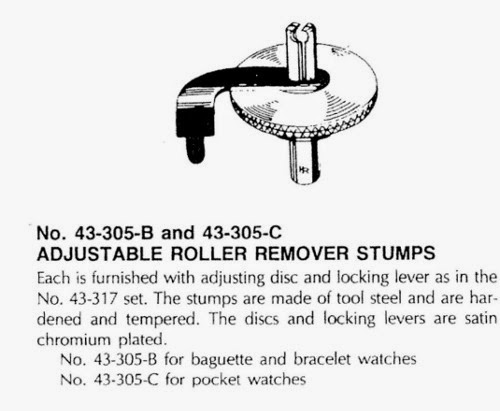
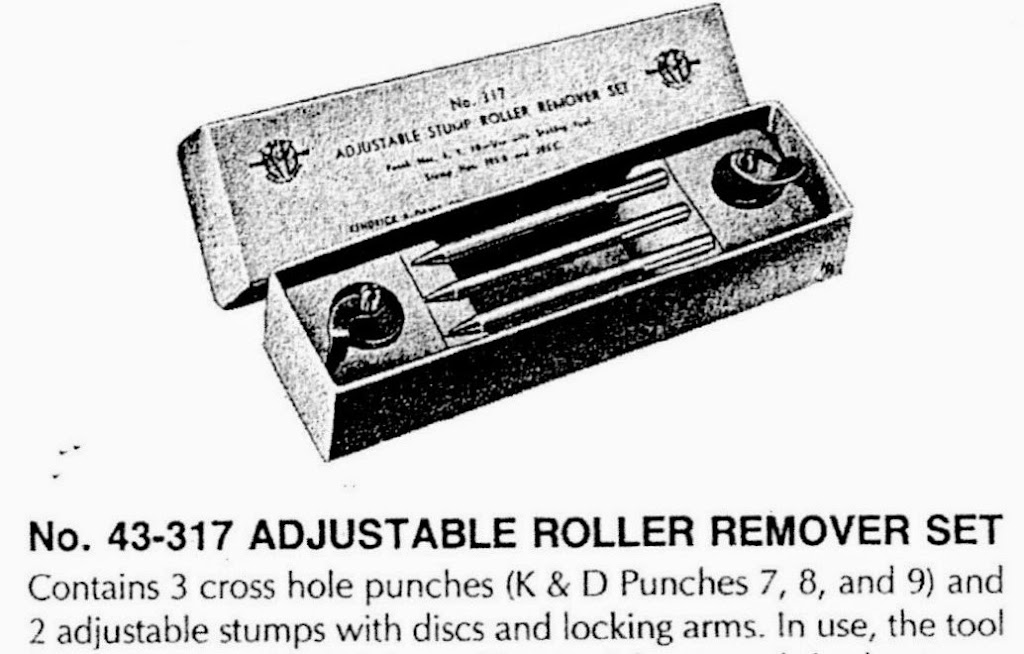
Once we remove the collet and hairspring, we need to remove the roller. A plethora of roller tools exist out there. In speaking with numerous watchmakers, most have said that they used the Rex Roller Remover. That surprised me. I had always used the K&D 305, because that’s the only tool we had in the lab.
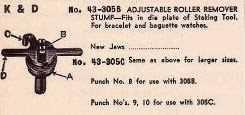
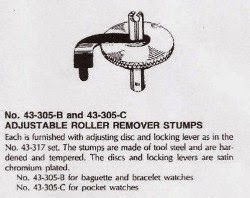
Since the end of World War II, watch schools have used K&D staking sets and the majority of those came with the 305 adjustable table removers – figures 3 and 6. In practice, however, watchmakers bought their tools from a variety of sources. I didn’t know that.
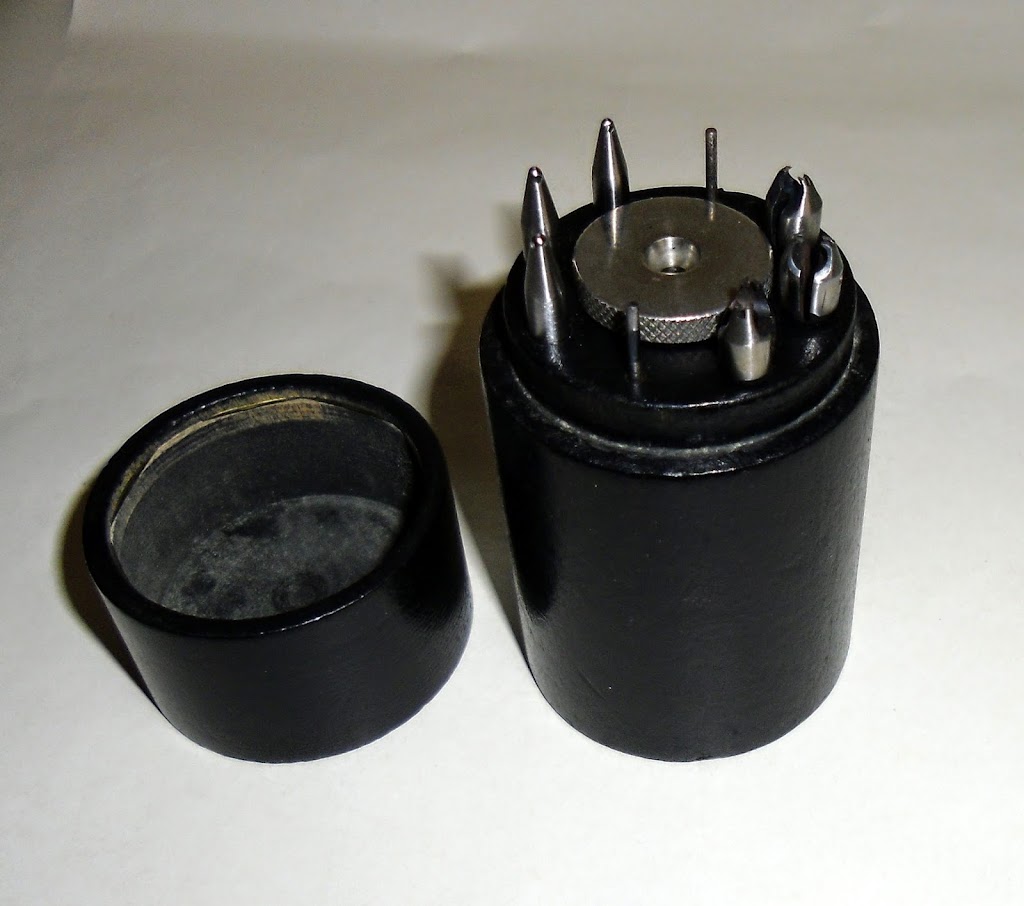
I see many Rex sets on eBay and other sites on the Internet. Those funny black cylinders seem to show up more often than not. They also sell for less than the K&D.
I decided to look into adjustable roller removers and found that K&D came late to the market. Roller remover stumps almost always appeared in staking sets, but Rex invented the adjustable sumps. I’ve also found that they have a superior configuration.
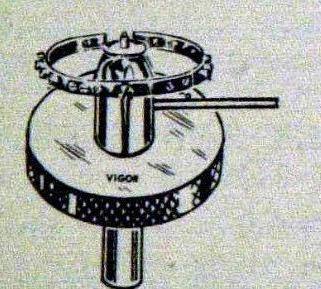
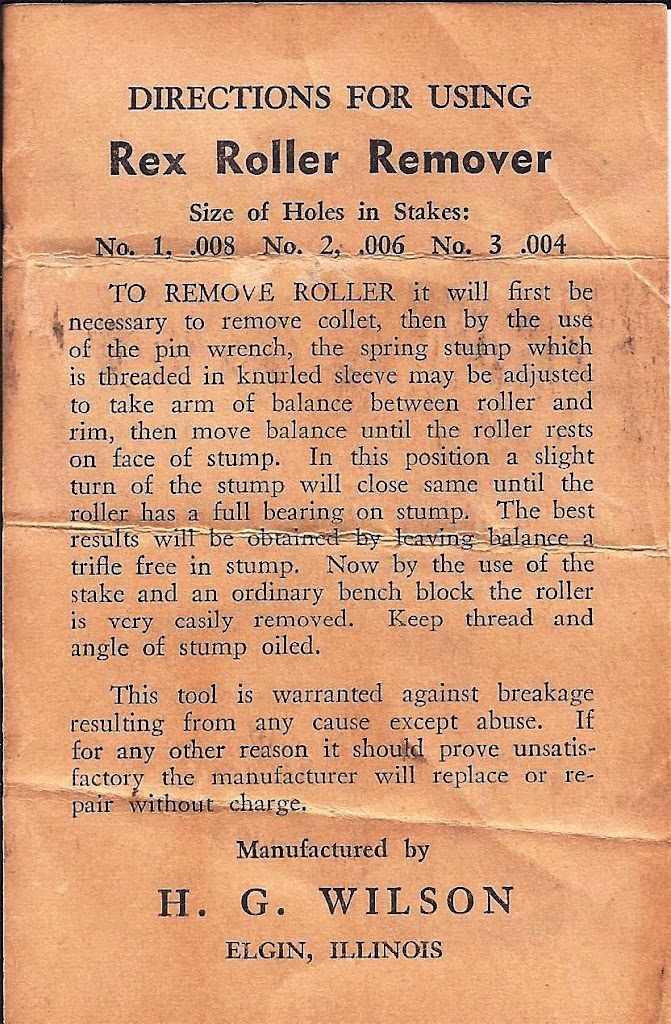
Figure 1 came from an old supply house catalog. Figure 2 shows how the tool worked and Figure 4 explains how it works. The Rex uses a tiny rod to tighten the stump’s teeth as they settle between the roller table and balance wheel. K&D requires a staking frame and the user to tighten the stump by turning either the chrome bottom (Figure 6) or the wing (on the older model Figure 3).
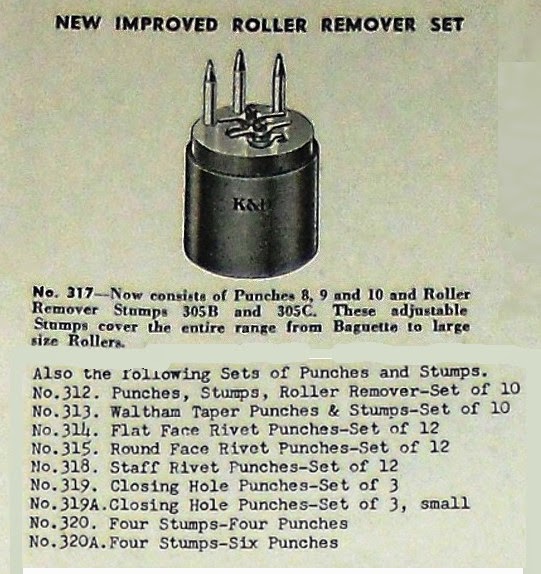
K&D had some difficulty achieving market adoption for the 305. The company included it in most of the staking boxes they sold beginning in 1946. They even changed the look of their original 305 (Figure 3) to resemble the Rex. Finally, they packaged the 305 to look like the Rex – Figure 7.
I have started using the Rex. The jury is still out between it and the early 305. I suggest you look at the shape of the stump head. Each iteration differs. Regardless, don’t dismiss the Rex. She might now look as hot as the younger model, but she’s a bargain.
|
|
|
||||||
[Click on image to enlarge]
|
|
|
![]() |
| Figure 7 |
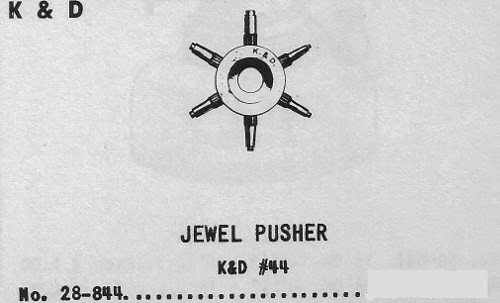
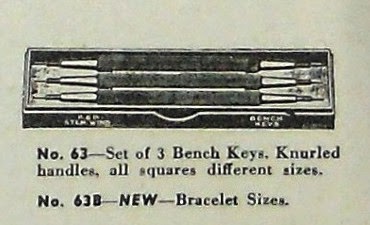
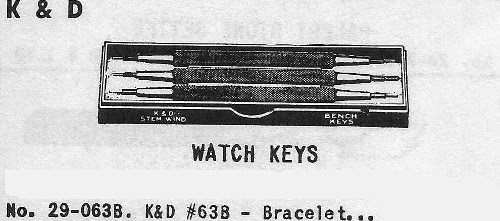
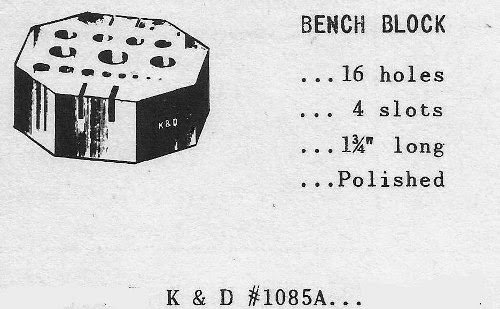
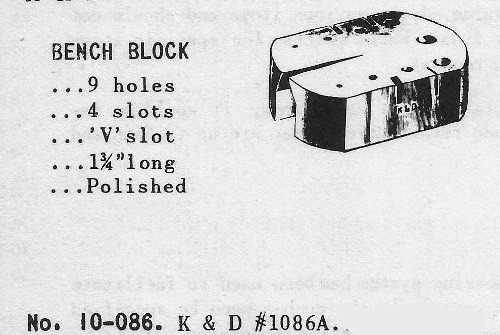
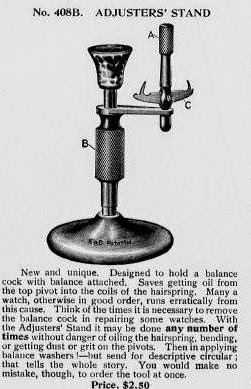
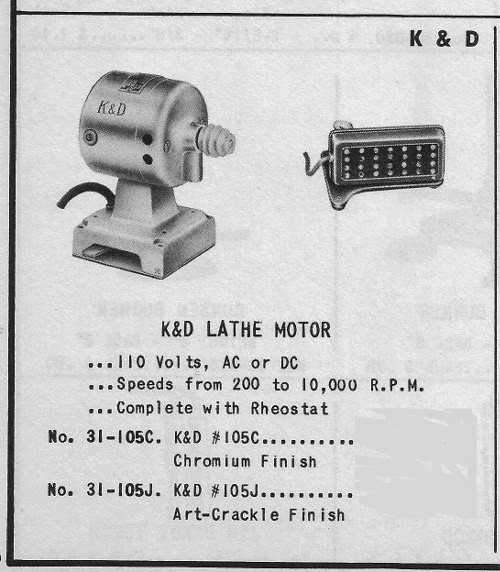
Kendrick and Davis K&D Tool Identification Guide
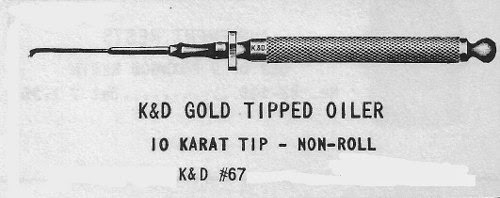
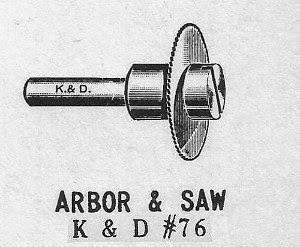
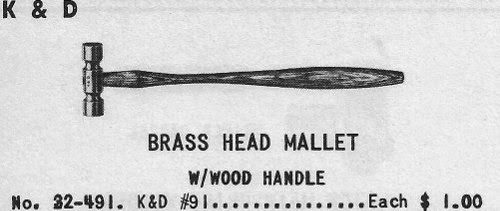
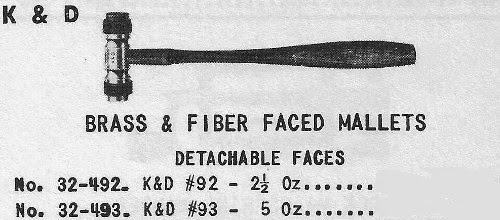
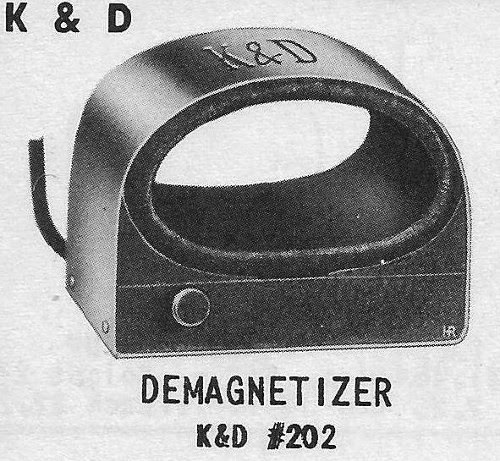
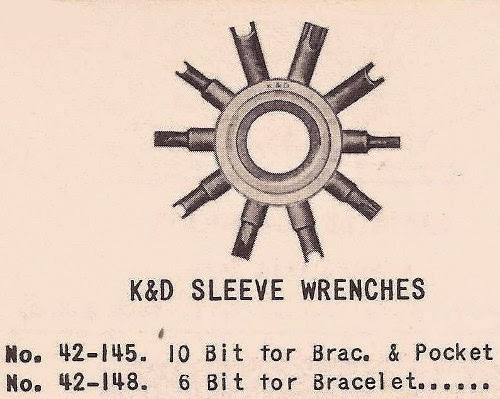
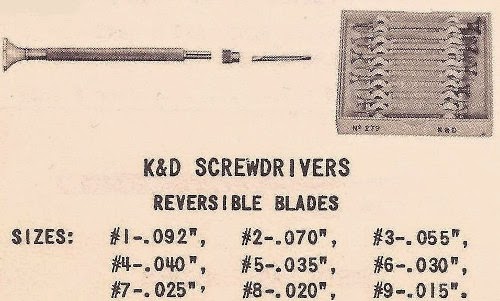
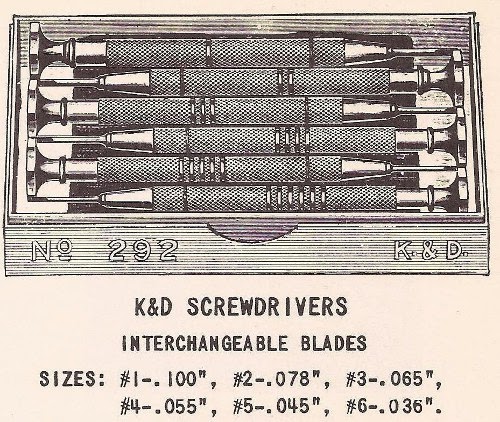
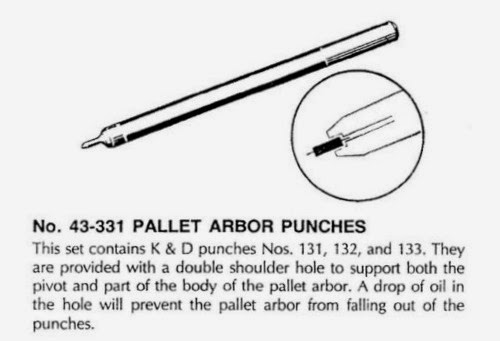
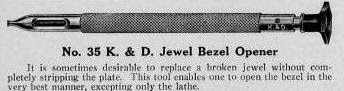
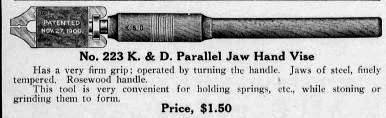
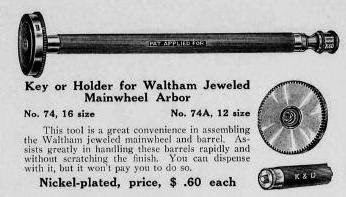
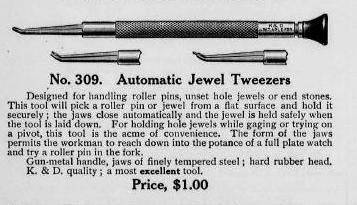
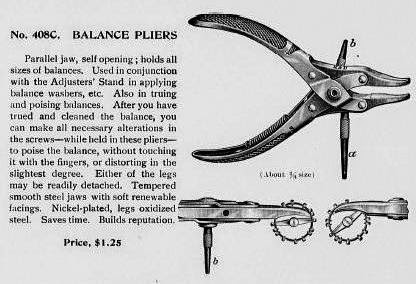
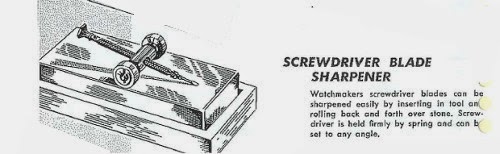
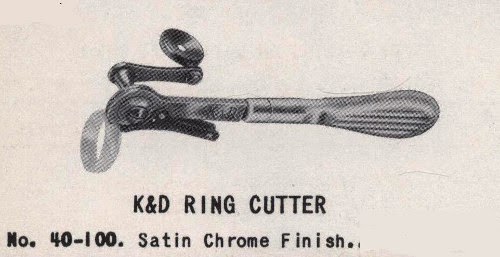
These catalog images can help people identify tools they may wish to purchase or sale on eBay or other sites. We see a surprising number of preowned watchmaker’s tools up for auction during warm months. During the late spring through late fall, estate sales proliferate the market. You will begin seeing more watchmaker’s tools for sale without descriptions. If you’re in the market, you will find that “being informed” makes a huge difference when it comes to paying the proper price for items and getting a great deal.
You may also discover that someone ran into a watchmaker’s estate and thought they struck gold. You can tell when the put a $150 staking set up and ask $850 for it.
These are K&D brand tools. The popularity of K&D Staking Sets have made many of their other tools popular. In fact, K&D tools are collectors favorites.
[Click on an image to enlarge it]
|
|
|
||||||
|
|
|
||||||
|
|
|
||||||
|
|
|
||||||
|
|
|
||||||
|
|
|
[Click on an image to enlarge it]
|
|
|
||||||
|
|
|
||||||
|
|
|
||||||
|
|
|
||||||
|
|
|
||||||
|
|
|
|
|
|
||||||
|
|
|
||||||
|
|
|
||||||
|
|
|
||||||
|
|
|
||||||
|
|
Kendrick and Davis Tools in Keystone Magazine 1909
Staking Punches Conversion Chart K&D, Marshall, Boley, Star & Bergeon
Flat and Round Face Solid Punches
| K&D | Marshall | Boley | Star | Bergeon | ||
| Flat Face Solid Punches | 104 | C1 | 13 | |||
| 105 | C2 | 12 | 25 | 233 | ||
| 106 | C3 | 10 | 26 | |||
| 107 | C4 | 9 | 27 | 232 | ||
| 8 | 28 | 231 | ||||
| 108 | C5 | 7 | 29 | 230 | ||
| 109 | C6 | 6 | 31 | 229 | ||
| 110 | C7 | 5 | 32 | 228 | ||
| 111 | C8 | 2.8 | 34 | 225 | ||
| 111A | C9 | 2.7 | ||||
| Round Face Solid Punchs | ||||||
| 112 | D1 | 50 | 36 | 282 | ||
| 113 | D2 | 49 | 37 | |||
| 46.5 | 39 | 281 | ||||
| 114 | D3 | 47 | 38 | |||
| 115 | D4 | 46 | 40 | 280 | ||
| 116 | D5 | 44 | 42 | 275 | ||
| 117 | D6 | 43 | 43 | 276 | ||
| 118 | D7 | 41 | ||||
| 119 | D8 | 39 | 46 | 273 | ||
| 119A | D9 | |||||
Staking Punches Conversion Charts K&D, Marshall, Boley, Star & Bergeon 2 of 2
If you have spent anytime with staking sets, you know the difficulty of finding compatible ID numbers and what they mean. You will find in this post, a conversion chart for Round Face Hole Punches (Rundpunzen mit Bohrung). See the description below the chart.
| K&D | Marshall | Boley | Star | Bergeon | ||
| Round Face Hole Punches | ||||||
| 74 | B2 | 72 | ||||
| 75 | B3 | 70 | ||||
| 76 | B5 | 68 | 100 | 270 | ||
| 77 | B6 | 67 | ||||
| 78 | B7 | 66 | ||||
| 64 | 101 | |||||
| 79 | B8 | 64 | ||||
| 80 | B9 | 63 | 102 | 267 | ||
| 81 | B10 | 62 | ||||
| 82 | B12 | 61 | 102A | 265 | ||
| 60 | 103 | 264 | ||||
| 83 | B13 | 59 | 103A | 263 | ||
| 84 | B14 | 58 | 104 | 262 | ||
| 85 | B15 | |||||
| 86 | 57.5 | |||||
| 87 | ||||||
| 88 | B16 | 57 | 104A | 260 | ||
| 89 | B17 | 56.5 | ||||
| 89A | 56 | 105 | 258 | |||
| 90 | B18 | |||||
| 91 | 55.5 | |||||
| 92 | B19 | |||||
| 93 | B20 | 55 | 106 | 256 | ||
| 93A | B21 | 54.5 | ||||
| 94 | B22 | |||||
| 95 | B23 | 54 | 107 | 254 | ||
| 96 | B24 | 53.5 | ||||
| 97 | B25 | |||||
| 98 | B26 | 53 | 108 | 252 | ||
| 99 | B27 | 52.5 | ||||
| 100 | B28 | 52 | 109 | 250 | ||
| 101 | B29 | |||||
| 101A | B31 | |||||
| 102 | 51.5 | |||||
| 102A | B32 | |||||
| 103 | B30 | 51 | 110 | 248 | ||
| 103A | B33 | |||||
Staking Punches Conversion Charts K&D, Marshall, Boley, Star & Bergeon 1 of 2
If you have spent any time with staking sets, you know the difficulty of finding compatible ID numbers and what they mean. You will find in this post, a conversion chart for Flat Face Hole Punches (Flachpunzen, ungebohrt). See the description below the chart.
| K&D | Marshall | Boley | Star | Bergeon | ||
| Flat Face Hole Punches | ||||||
| 43 | 36 | |||||
| 44 | A2 | 35 | ||||
| 45 | A3 | 33 | 65 | 222 | ||
| 46 | A5 | 31 | 66 | 221 | ||
| 47 | A6 | 30 | ||||
| 48 | A7 | 29 | ||||
| 28 | 67 | 219 | ||||
| 49 | A8 | 27 | ||||
| 50 | A9 | 26 | 68 | 217 | ||
| 51 | A10 | 25 | ||||
| 52 | A12 | 24 | 68A | 215 | ||
| 23 | 69 | 214 | ||||
| 53 | A13 | 22 | 69A | 213 | ||
| 54 | A14 | 21 | 70 | 212 | ||
| 55 | A15 | |||||
| 56 | 20.5 | |||||
| 57 | ||||||
| 58 | A16 | 20 | 70A | 211 | ||
| 59 | A17 | 19.5 | ||||
| 59A | 19 | 71 | 210 | |||
| 60 | A18 | |||||
| 61 | 18.5 | |||||
| 62 | A19 | |||||
| 63 | A20 | 18 | 72 | 208 | ||
| 17 | 73 | 206 | ||||
| 63A | A21 | 17.5 | ||||
| 64 | A22 | 16.5 | ||||
| 65 | A23 | |||||
| 66 | A24 | 16 | 74 | 204 | ||
| 67 | A24 | 15.5 | ||||
| 68 | A26 | 15 | 75 | 202 | ||
| 69 | A27 | |||||
| 70 | A28 | |||||
| 71 | A29 | |||||
| 71A | A31 | |||||
| 72 | ||||||
| 72A | A32 | |||||
| 73 | A30 | 14 | 76 | 200 | ||
| 73A | A33 | |||||
For final staking of balance staffs
For final staking of train pinions
For pressing hairspring collets on balance wheels
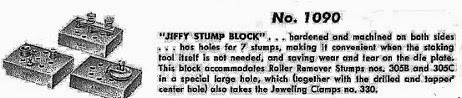
For use as stumps when inverted into the staking tools. Ideal for riveting “hard” staffs will save wear and tear on the expensive die plate.
When used for final staking of a balance staff or pinion, it is important to select the correct size punch for doing a good job and avoiding damage to the punch. A proper fitting punch should fit freely over the collet hub with a clearance of about .02 to .03 mm. Always tap the punch lightly with a brass hammer turn- ing it about one quarter of a turn after each blow.
If you select too large a punch, it is possible that you may not obtain the full degree of bearing surface, thereby, placing too much pressure on the inside corner of the punch causing it to flatten out or chip. If you select too small a punch, the staff becomes a wedge and will split the punch or round the inside corners of the punch.
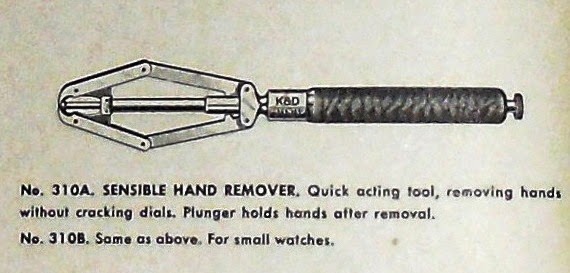
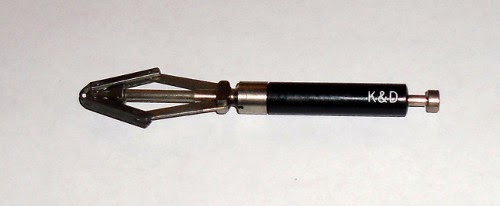
K&D Sensible Hand Remover Model 310
I have seen some confusion about a popular tool created by K&D around the turn of the 20th century, e.g., 1902. I notice that confusion as I browse eBay’s listings of pre-owned watch tools. The sellers lack knowledge of the tool, how it works and when K&D made it. Let’s take a shot at clearing-up that confusion, now.
Several watch and jewelry suppliers carried the K&D Sensible Hand Tool Remover. Let’s look at how the largest supplier, Swartchild & Company, advertised the Model 310 in their 1928 catalog like this:
This has a self-acting plunger, which comes down on the top of the hand socket, holding the hands in the tool after they are moved from the watch. Pressure on the dial comes directly over the hour wheel. Does not crack dials. Finely finished. Hard rubber handle.
![]() |
| Figure 2 |
K&D manufactured the 310 & 310B from 1910 – 1992. The one in the photo below has a Bakelite handle, which would date it in the 1930’s.
Several variations of this tool exists. I have several and each handle is made out of different materials.
The tool came in two models: the 310 and the 310B. The 310 has a larger head on the plunger (see fig 1). When you put the 310 on a wristwatch, it’s simply slips.
The 310B is too small for a pocket watch and it also slips.
Unfortunately, most sellers on eBay put this tool up for auction and have no idea if it’s for a bracelet or a pocket watch.
![]() |
| Fig 1 |
Another problem exists. In photos the tool appears large. In reality it’s a little large than a tweezers. The photos fool anyone that hasn’t seen a 310.
| Figure 3 |
Note: The tool is much smaller than one would imagine from the photographs we see on eBay and in catalogs. It fits one’s hand nicely.
The patent – US922096 A
![]() |
| Figure 4 |
While we may not know the author, Hammel & Riglander published them.
K&D sold incredible products. They cornered the staking market by 1902. By 1909, the company had many suitors. We can only speculate at this point, but it appears one of those suitors acquired K&D and Hammel & Riglander appears like the winning suitor.